

It is a winter annual herb commonly found around cultivated fields, roadsides, and open fields. It germinates in autumn and overwinters in a rosette form close to the ground. From April to June, white flowers bloom in cymose inflorescences at the tips of the stems, and the fruits ripen from May to July.
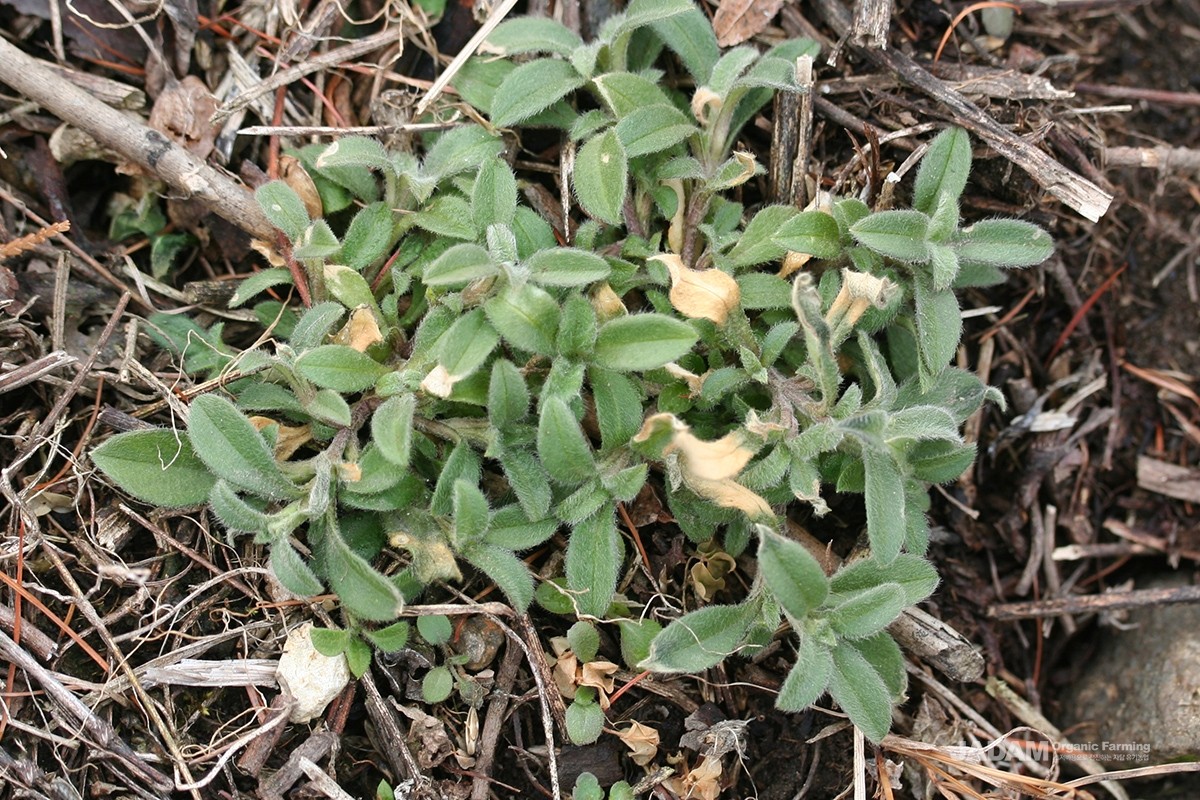
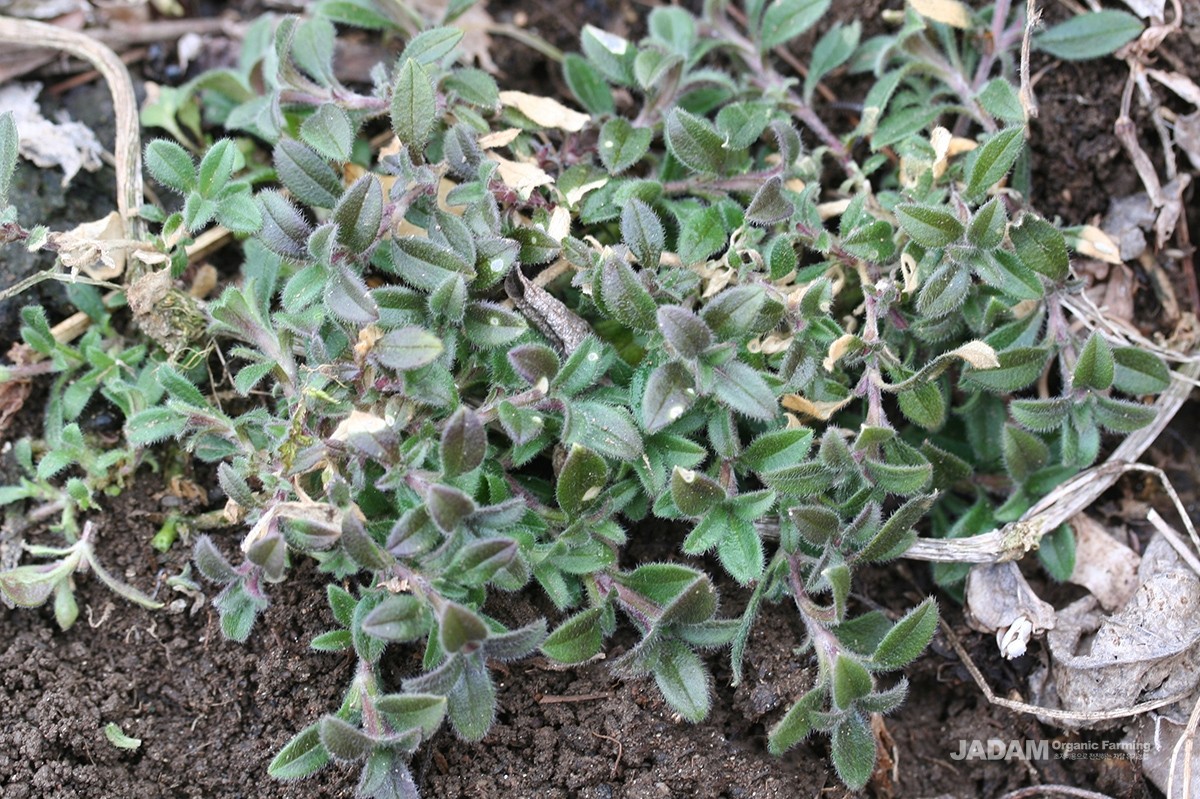
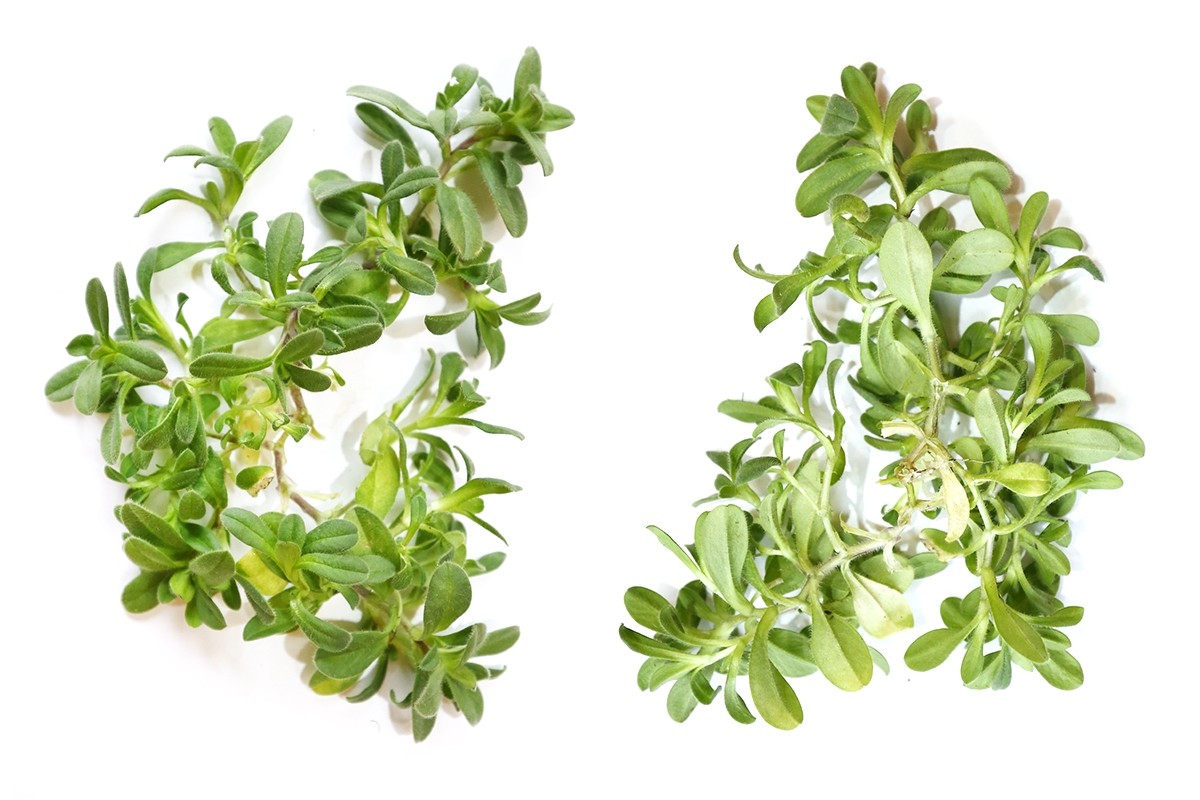
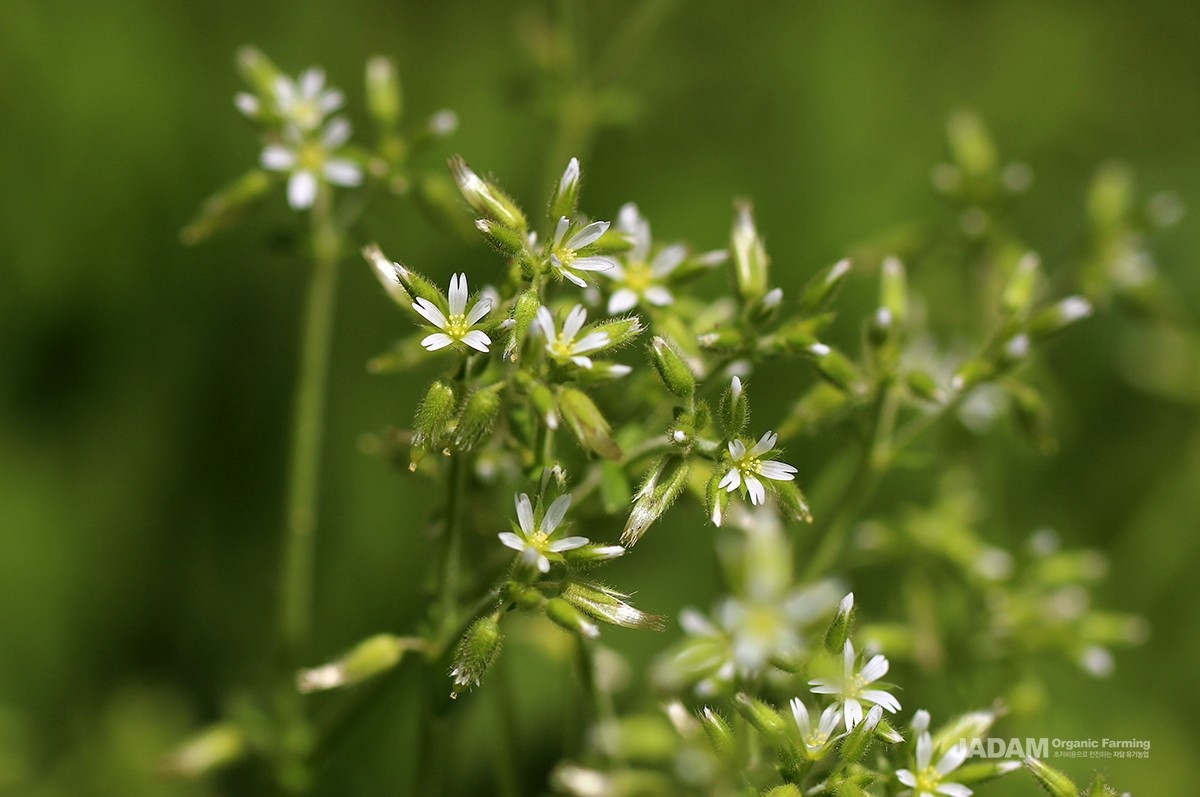
Hallasan Mouse-ear Chickweed (Cerastium holosteoides var. hallaisanense) is a winter annual herb commonly found around fields, paddy banks, and orchards. During midwinter, it forms a flat rosette close to the ground, giving it a charming, compact appearance. Even at full growth, it only reaches 15-30 cm in height, with many branched stems growing obliquely. The stems often appear purplish, and the leaves are opposite, oval-shaped, and taper at both ends. The entire plant is covered with fine hairs.
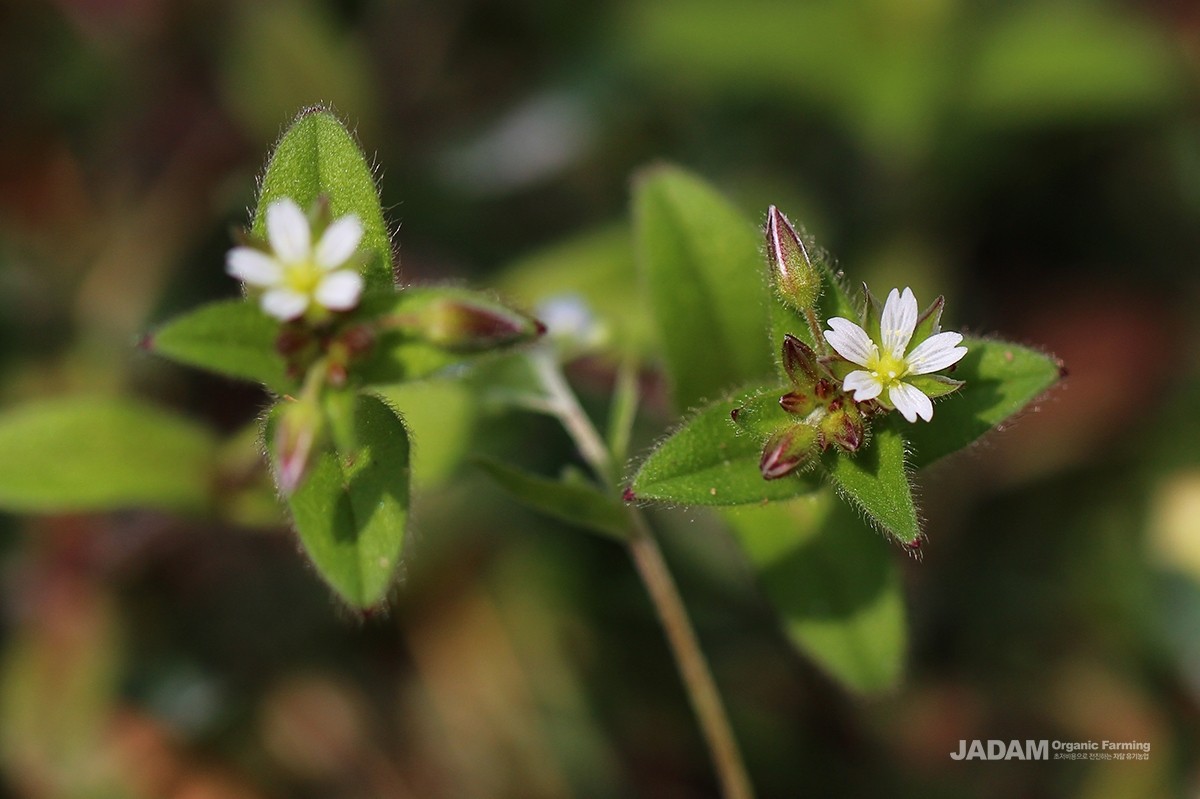
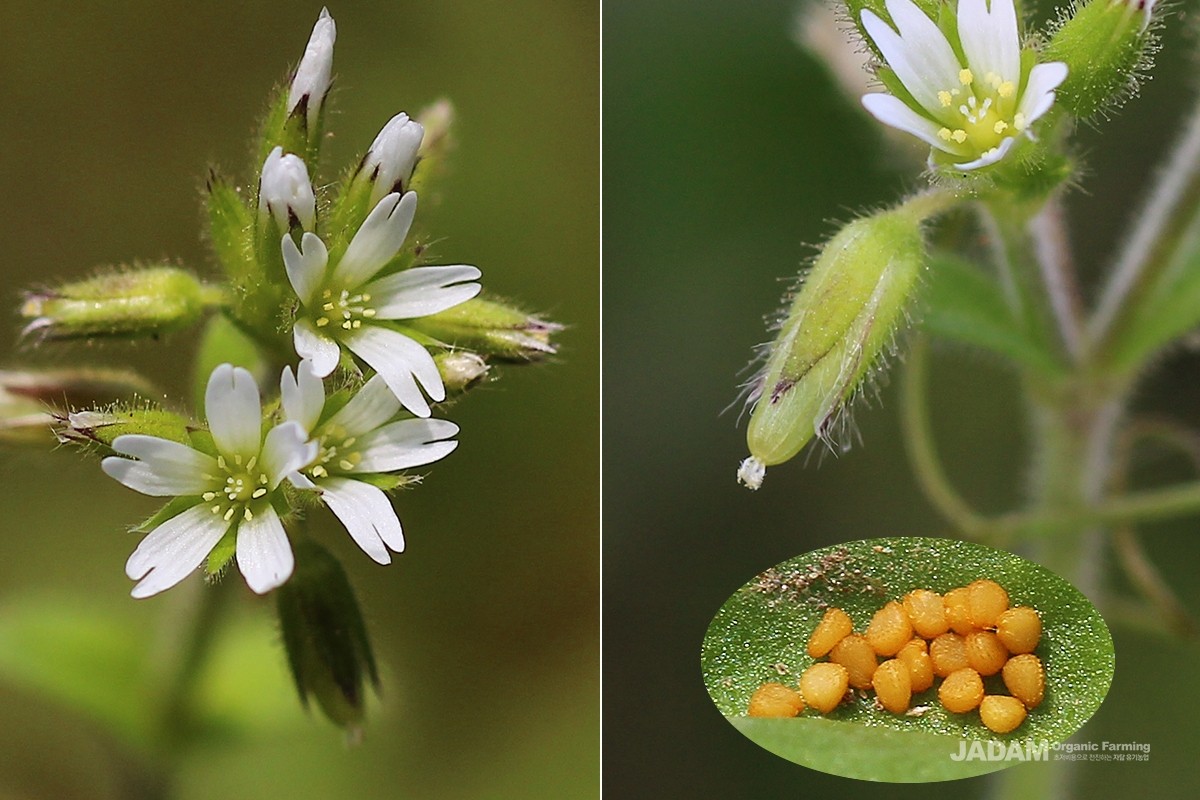
From April to June, white flowers bloom in clusters at the tips of the stems. Each flower has five white petals, each deeply notched at the tip. The style divides into five lobes, surrounded by stamens. The sepals are almost the same length as the petals and are densely covered with glandular hairs on the back. These glandular hairs secrete sticky substances, which act as a defensive mechanism against insects attempting to steal nectar from behind the flower.
After pollination and fertilization, the pistil elongates into a conical fruit, and the peduncle also lengthens, causing the fruit to droop downward. When the seeds mature, the capsule splits open in then crown-like teeth, releasing dozens of small light brown seeds with minute bumps that help them adhere to the soil.
Hallasan Mouse-ear Chickweed can be distinguished by the reddish dots at the tips of its upper leaves and sepals. In contrast, the naturalized species CLammy chickweed (Cerastium glomeratum) lacks these red dots. Clammy chickweed is lighter green overall, with spatulate lower leaves and more glandular hairs that produce sticky secretions.
▶ Usage and Medicinal Properties
In winter and early spring, the young shoots are blanched and seasoned as a vegetable or used in soybean paste soup.
It is said to be effective for fevers caused by colds, high blood pressure, mastitis, and boils.
The taste is mild, and its nature is cool.
▶ Control Method
Because the plant does not grow tall, it usually poses no problem in orchards.
However, in fields or greenhouses, it is advisable to remove the stems in spring before the seeds disperse.
▶ Name Origin and Similar Species
The name is believed to come from the reddish dot at the tip of the sepals when the flowers bloom and from its occasional use as an edible herb.
Similar species include Clammy Chickweed (Cerastium glomeratum), which is lighter green, and Large Mouse-ear Chickweed (Cerastium holosteoides), which has larger flowers.