

Fruit tree pest
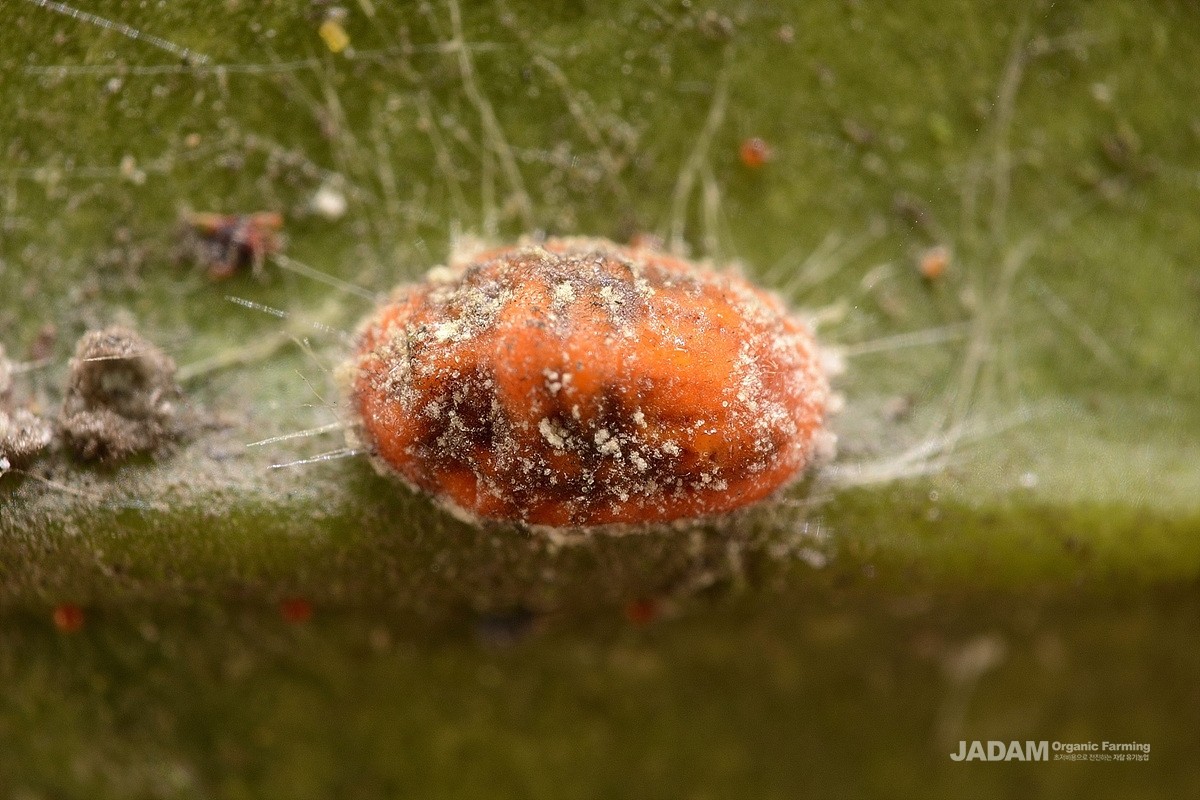
Cottony Cushion Scale
Order: Hemiptera
Family: Monophlebidae
▶Scientific name: Icerya purchasi Maskell
▶Common name: Cottony cushion scale
▶Size: body length 4- 6 mm
▶Host plants: citrus, apple, pear, persimmon, fig, pittosporum, oleander,
camellia, and many others.
▶Distribution: Korea, Japan, China, Taiwan, the United States, Africa,
Australia, and other regions.
The female adult is oval-shaped, wingless, and 4-6 mm long, with a prominently raised thoracic dorsum. The body is dark reddish-brown with black spots, and the dorsal surface is covered with a yellowish waxy secretion. Around the body, fibrous wax filaments radiate outward like glass fibers. The antennae and legs are black and well developed; the antennae consist of 11 segments, and the legs bear long brown setae. The mouthparts are small, and the oval-shaped anal opening is located at the end of the dorsum, surrounded by long brown setae.
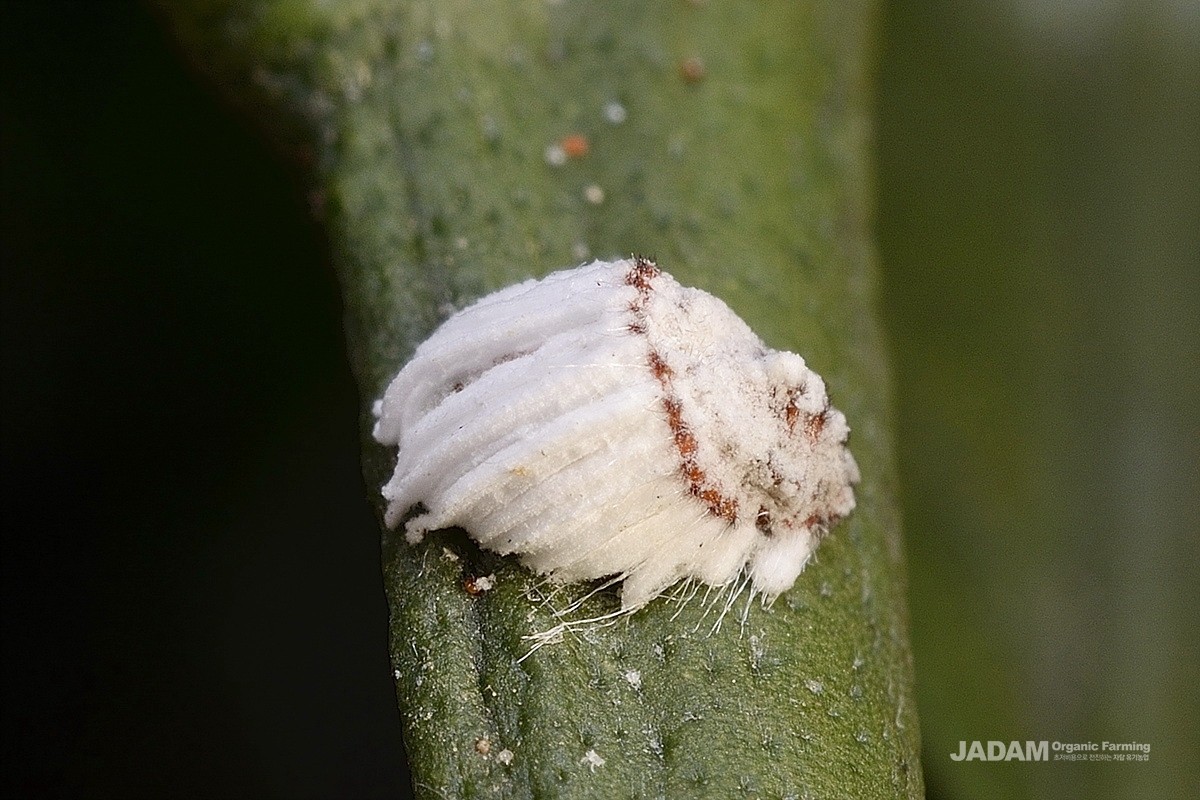
When mature, the female produces a large cottony ovisac on the ventral side of the abdomen. The ovisac is 12-13 mm long, white and semicircular, and bears many longitudinal ridges. The female carrying the ovisac bends the tip of her abdomen upward, forming a distinctive appearance. The eggs are oval and orange-yellow, while the nymphs are oval and reddish-brown.
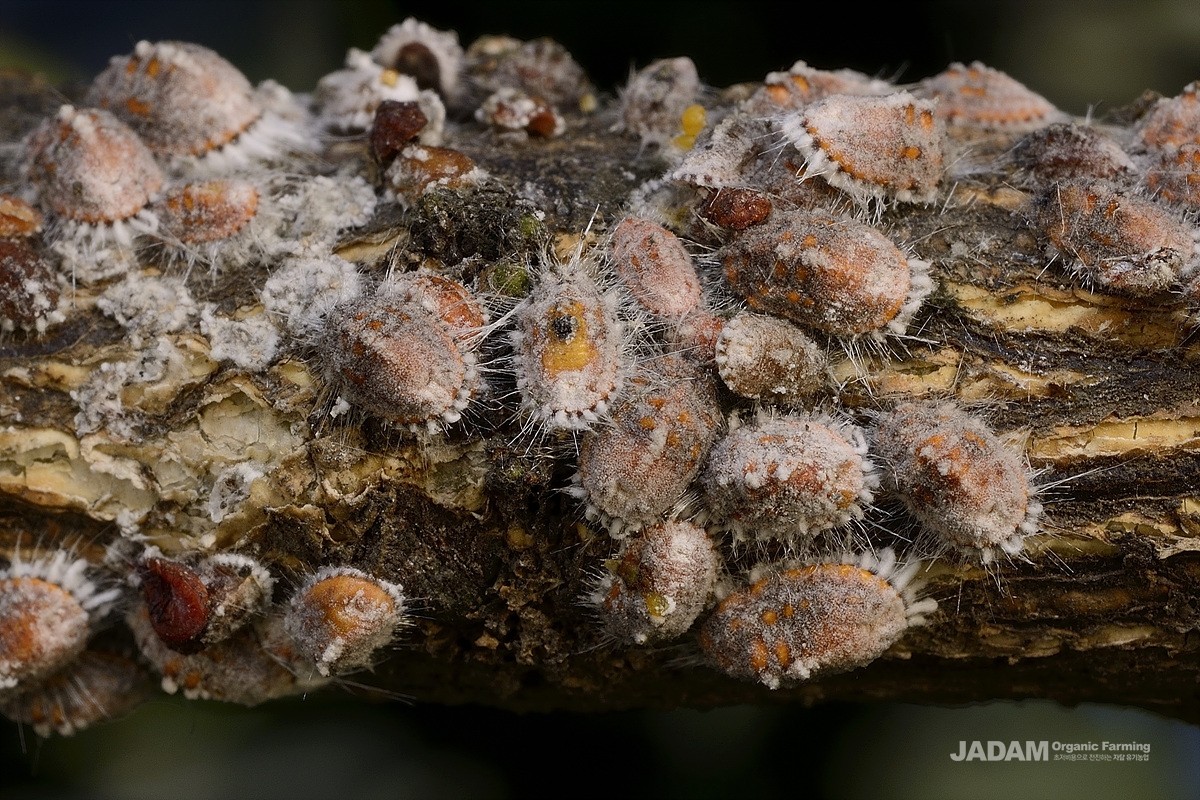
The species produces 2-3 generations per year and overwinters as adults or nymphs. Generations overlap, so eggs, nymphs, and adults can be found simultaneously. Nymph populations peak in early June, early August, and October. Each female lays about 600 eggs in the first generations and 200 eggs in the second generation. The nymph fee on the sap of host plant leaves, then move to young branches to settle. When populations are high, they may cluster densely on stems. Males can be distinguished at the late second instar, and by the third instar they lose their mouthparts, move actively, settle, spin a cocoon, and pupate.
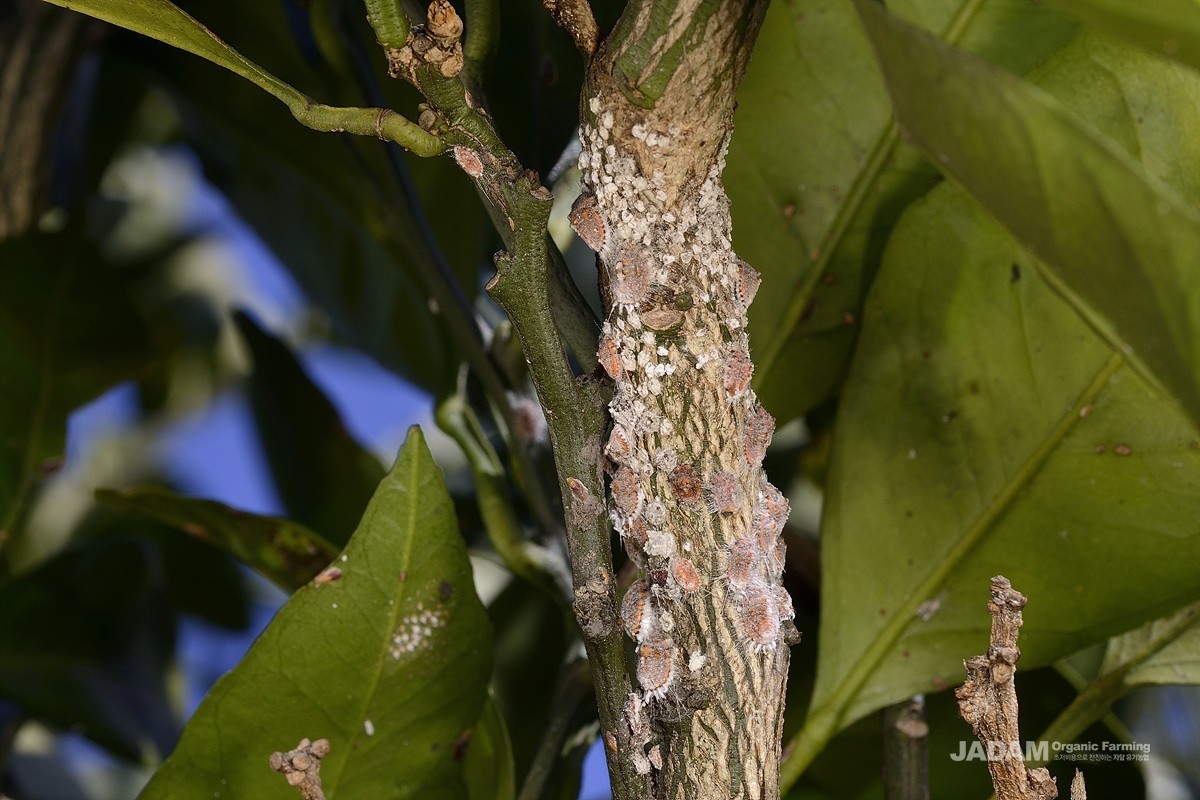
The insect infests many woody hosts, including citrus, apple, pear, persimmon, fig, pittosporum, oleander, and camellia. By sucking sap from young shoots it weakens the host tree and promotes the development of sooty mold.
[Text source: National Crop Pest Management System, Korea]