

It is a naturalized plant native to Europe and Southwest Asia, commonly found around cultivated fields, roadsides, and open fields. This winter annual germinates in autumn, overwinters in a rosette form, and from early spring to May, it produces flowers and fruits before withering away in summer.
Around this time of year, if you visit the fields, you can find many plants lying flat on the ground in a rosette shape, overwintering close to the soil. These are winter annual herbs that sprout in autumn, survive the winter in the form, and then bloom from early spring. Because they live through the winter, they are sometimes called biennial herbs or plants that grow across two years. One such plant is the Persian speedwell (Veronica persica).
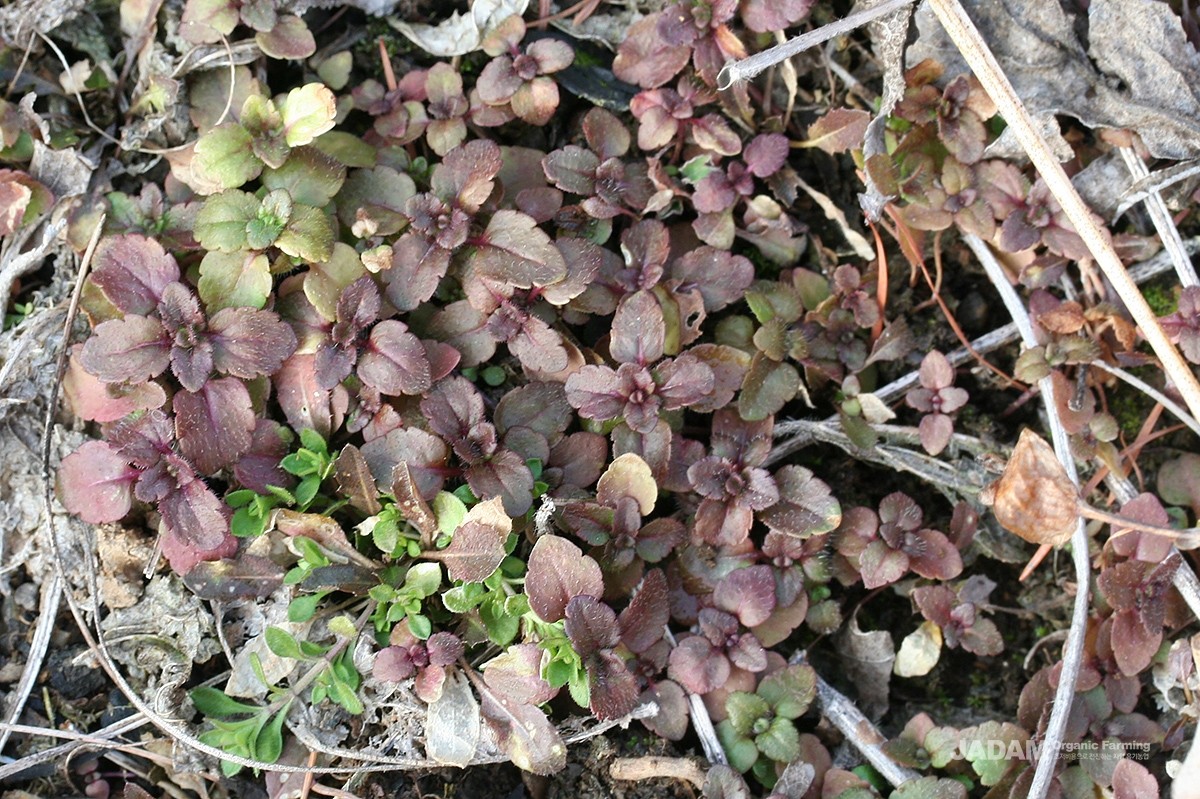
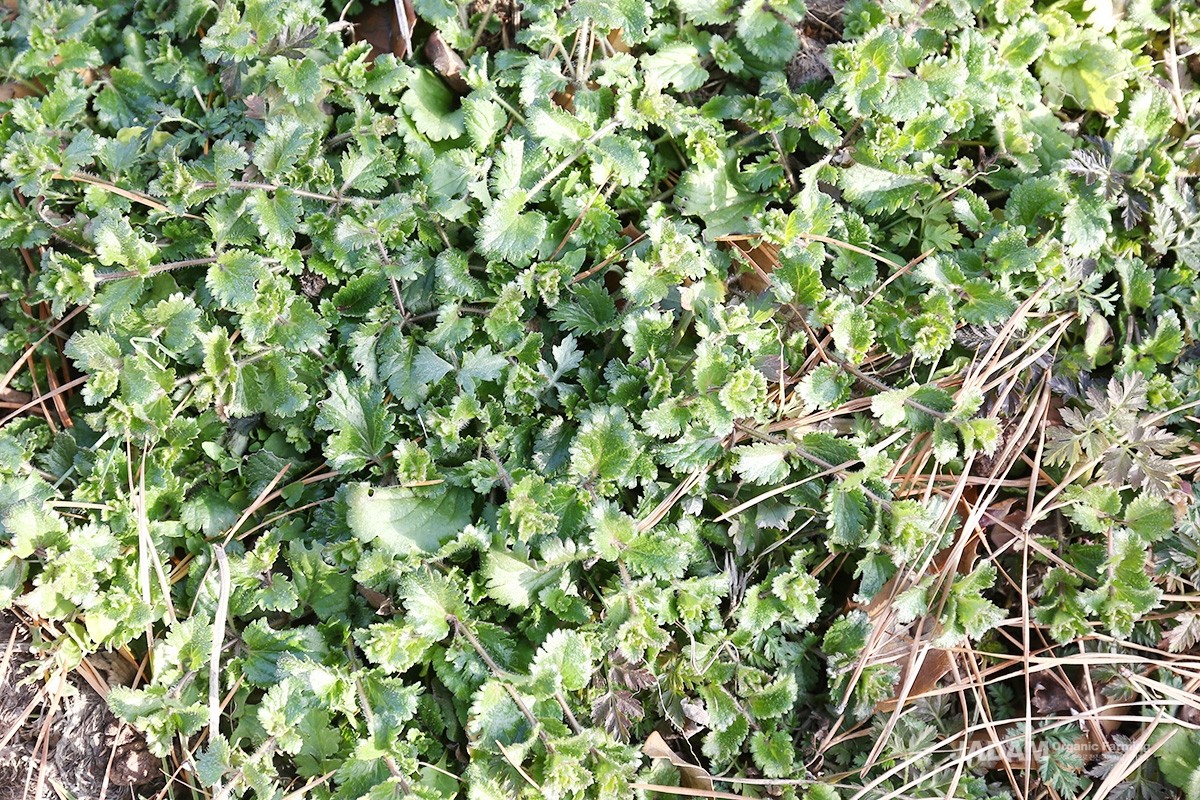
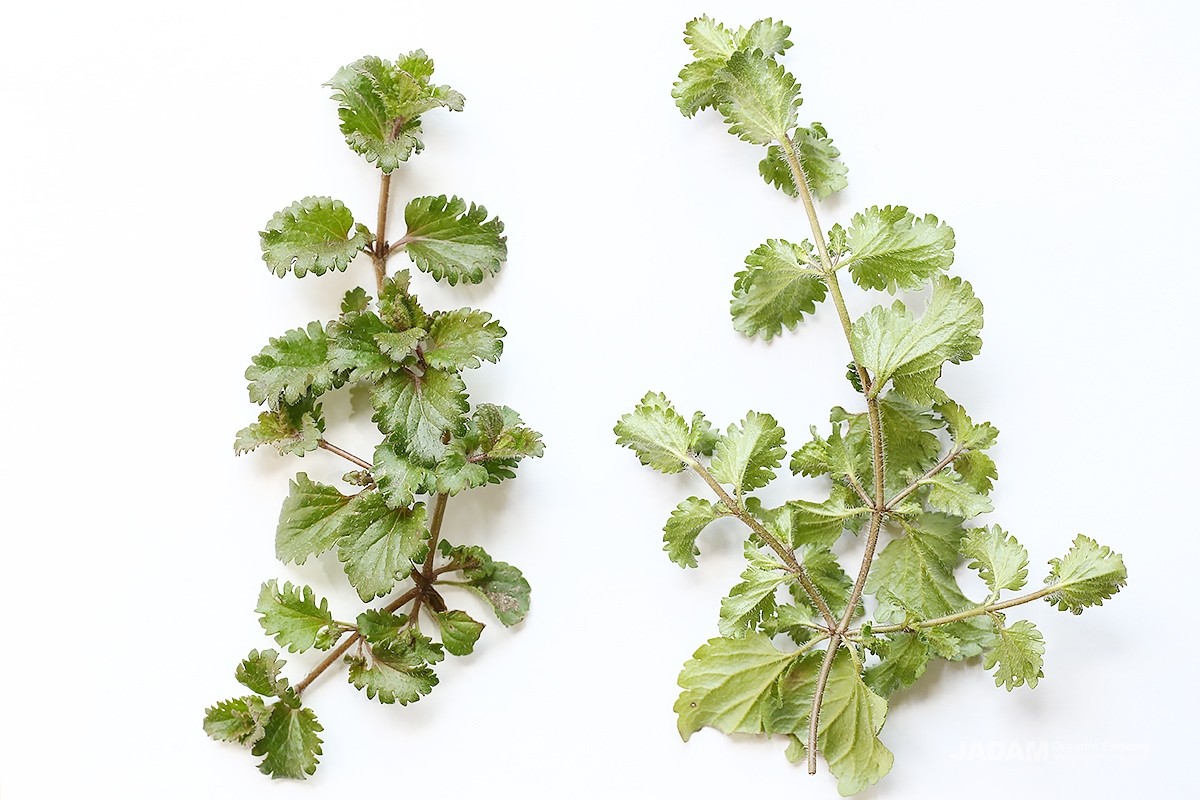
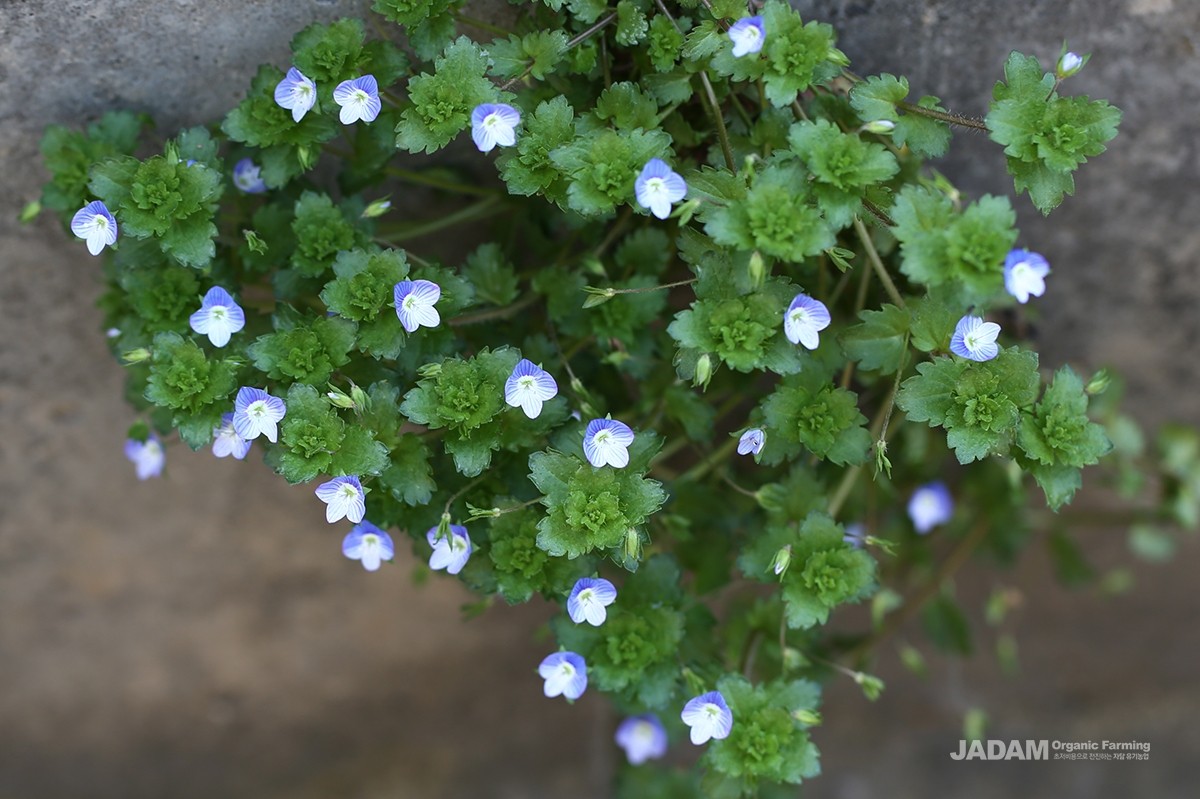
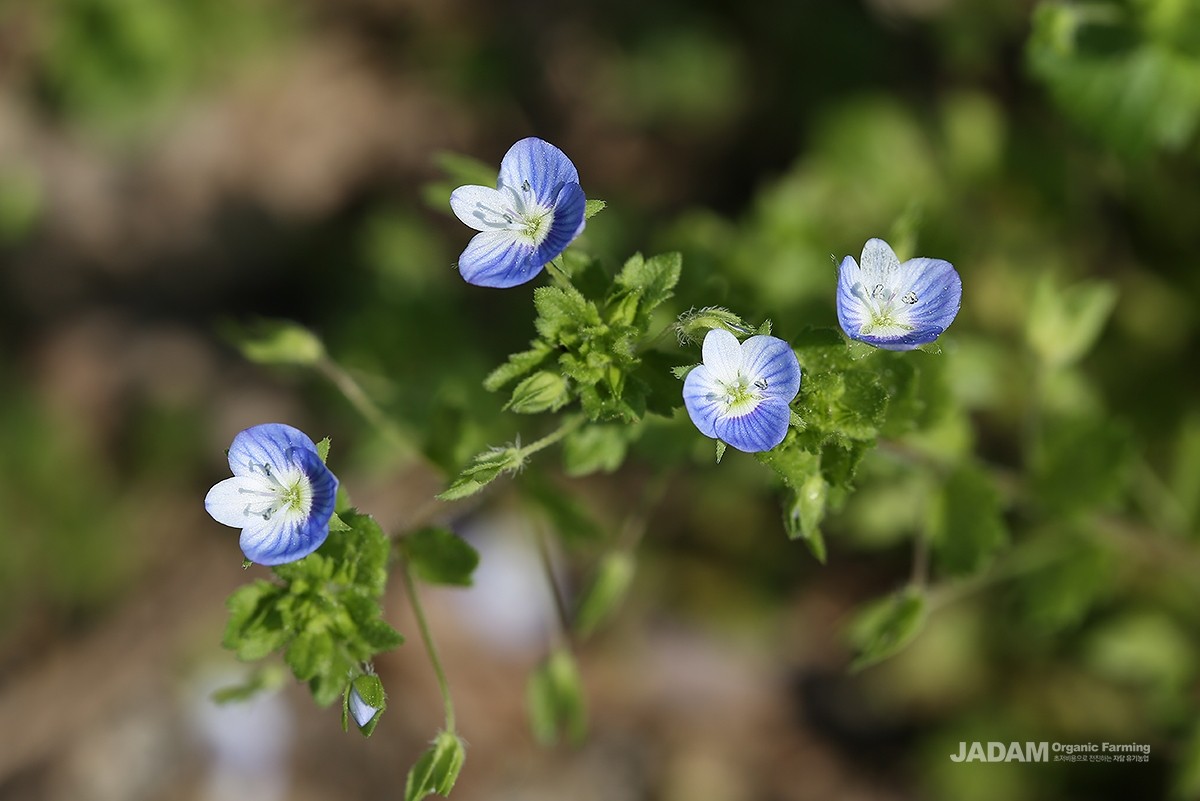
Even when fully grown, it does not stand upright but grows slanted with several branching stems. The entire plant is covered with soft hairs. The leaves are round and egg-shaped, with rounded serrations along the edges. From early spring to May, it produces delicate sky-blue flowers. The petals close when it is cloudy or dark and open wide under sunlight.
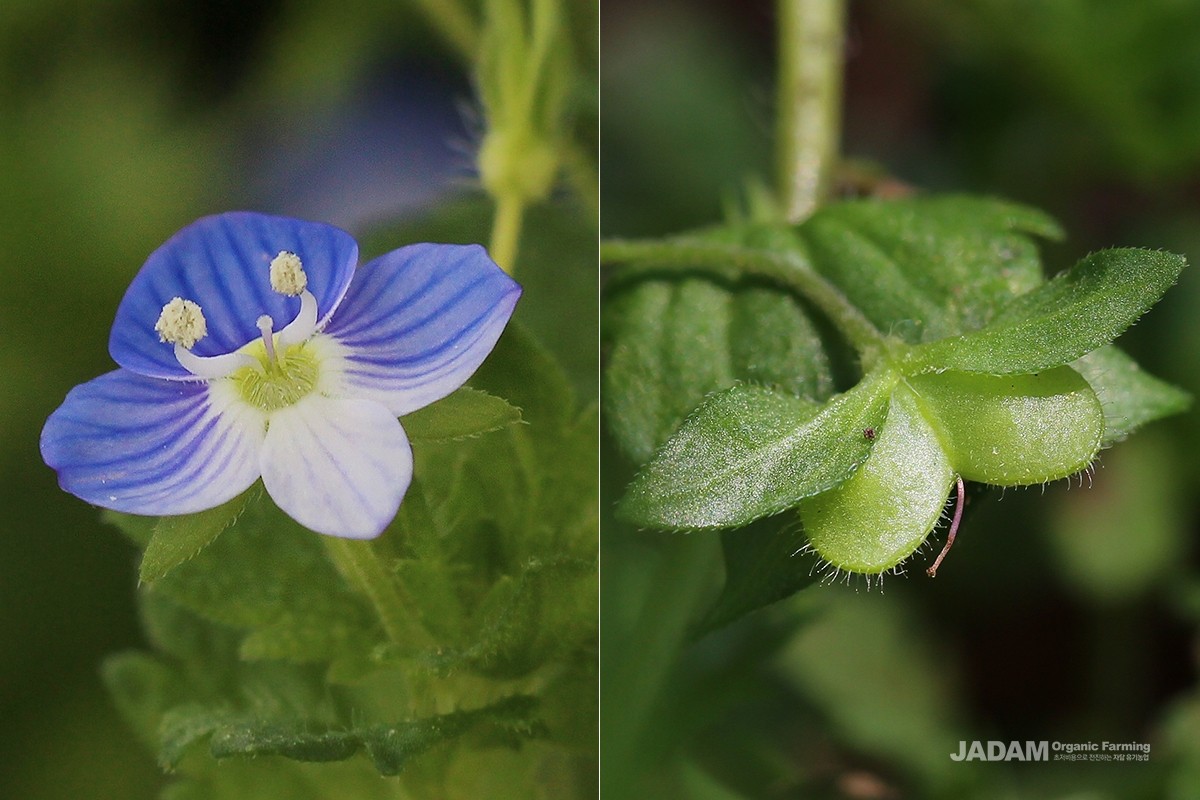
The flowers are 8-10 mm in diameter, about the size of a pinky fingernail, and bloom singly on long peduncles from the leaf axils. The sepals and petals are divided into four parts, there are two stamens and one pistil. When small insects visit the flower for pollination, the petals soon wither and fall, and the flower stalk droops downward, where the fruit begins to form.
The fruit is hidden beneath four large sepals and hangs downward, making it less visible. It has the shape of an inverted heart and is covered with fine soft hairs. The plant’s Korean name, “Gaeburalpul”, comes from the fruit’s resemblance to a dog’s testicles. When the fruit ripens and splists, it releases tiny oval seeds with fine wrinkles.
▶ Usage and Medicinal Properties
In winter and early spring, the young shoots can be blanched and seasoned with soybean paste or soy sauce as a vegetable dish. The flowers can be used in salads or as flower tea. Medicinally, it is said to be effective for hernia pain, swollen testicles, lower back pain, and leucorrhea. The taste is sweet and sour.
▶ Control Method
Because its flowers are beautiful, its flowering period is long, and it does not grow tall, it can be left as an ornamental plant if it does not interfere with crops. However, in crop fields, it is best to remove the stems in spring before the seeds scatter.
▶ Name Origin and Similar Species
The name “Gaeburalpul” (Persian speedwell) comes from the fruit’s resemblance to a dog’s testicles and its larger size compared to similar species. It is also known as “Bomkachi” (Spring Veronica or Spring Beauty) in Korean. Similar species include Veronica arvensis, Veronica polita, and Veronica peregrina.