

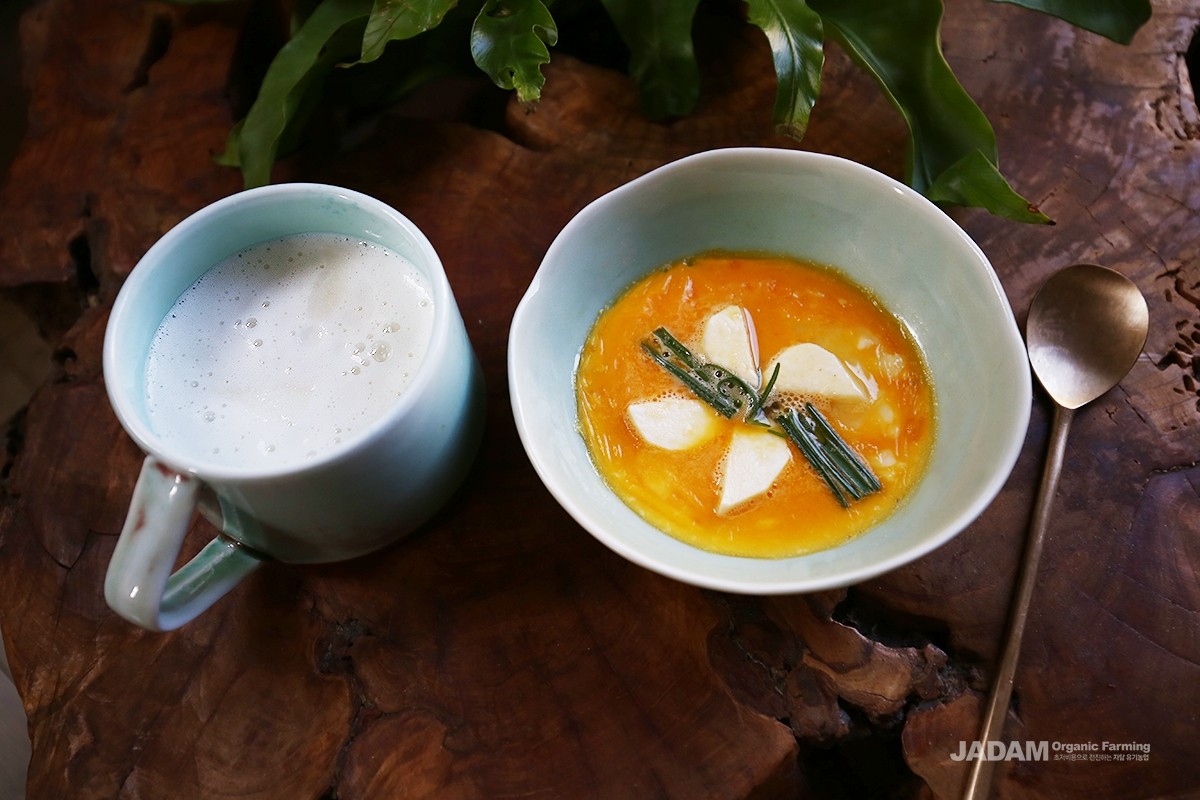
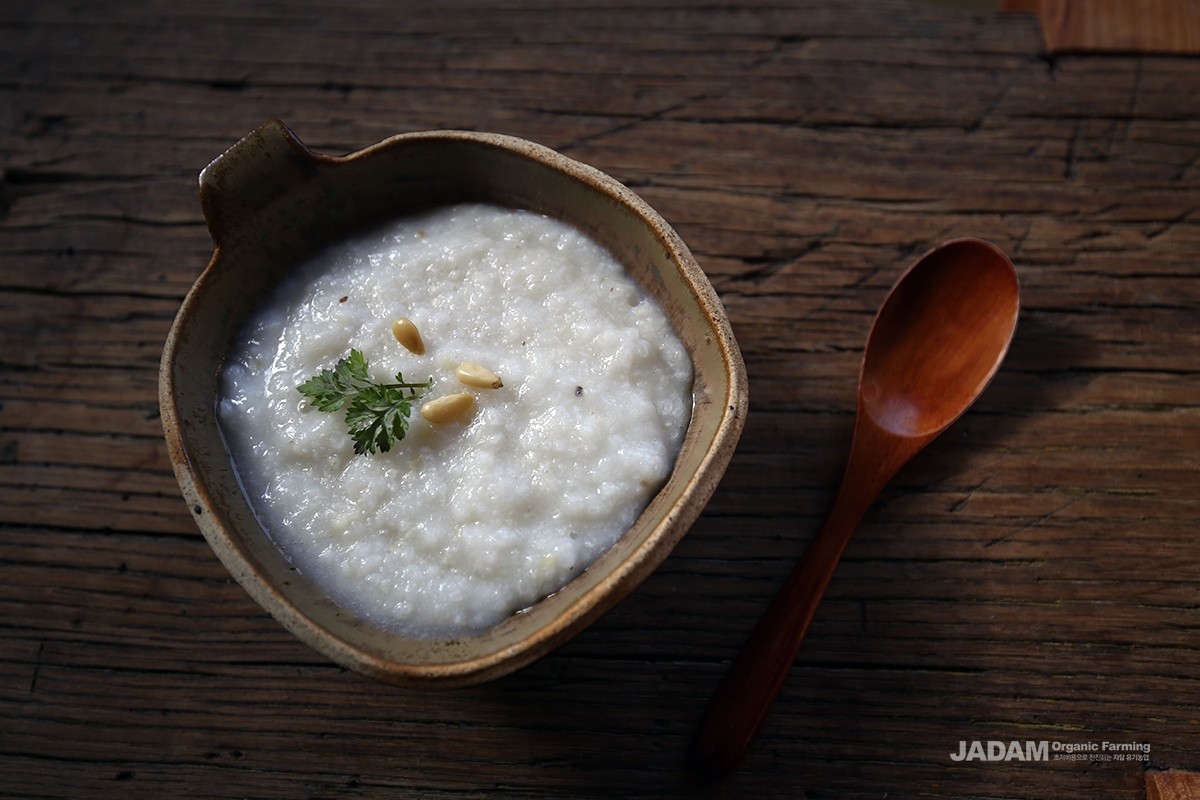
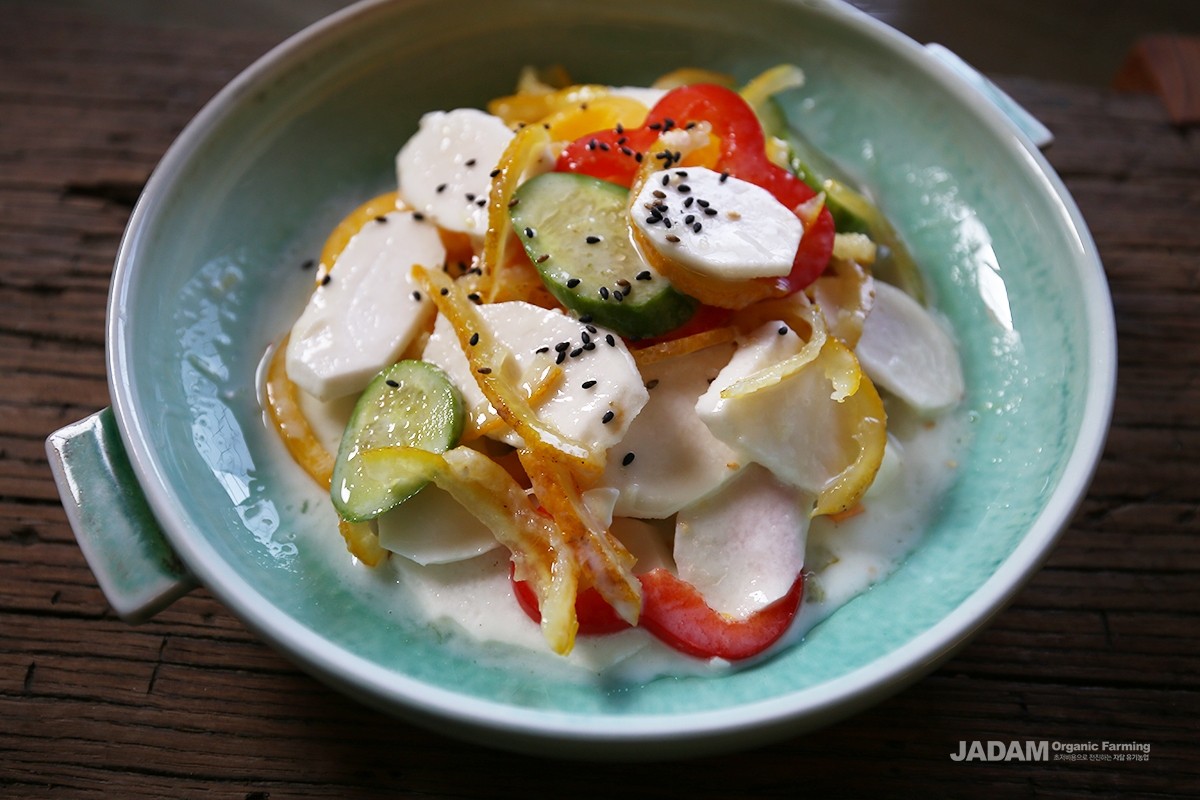
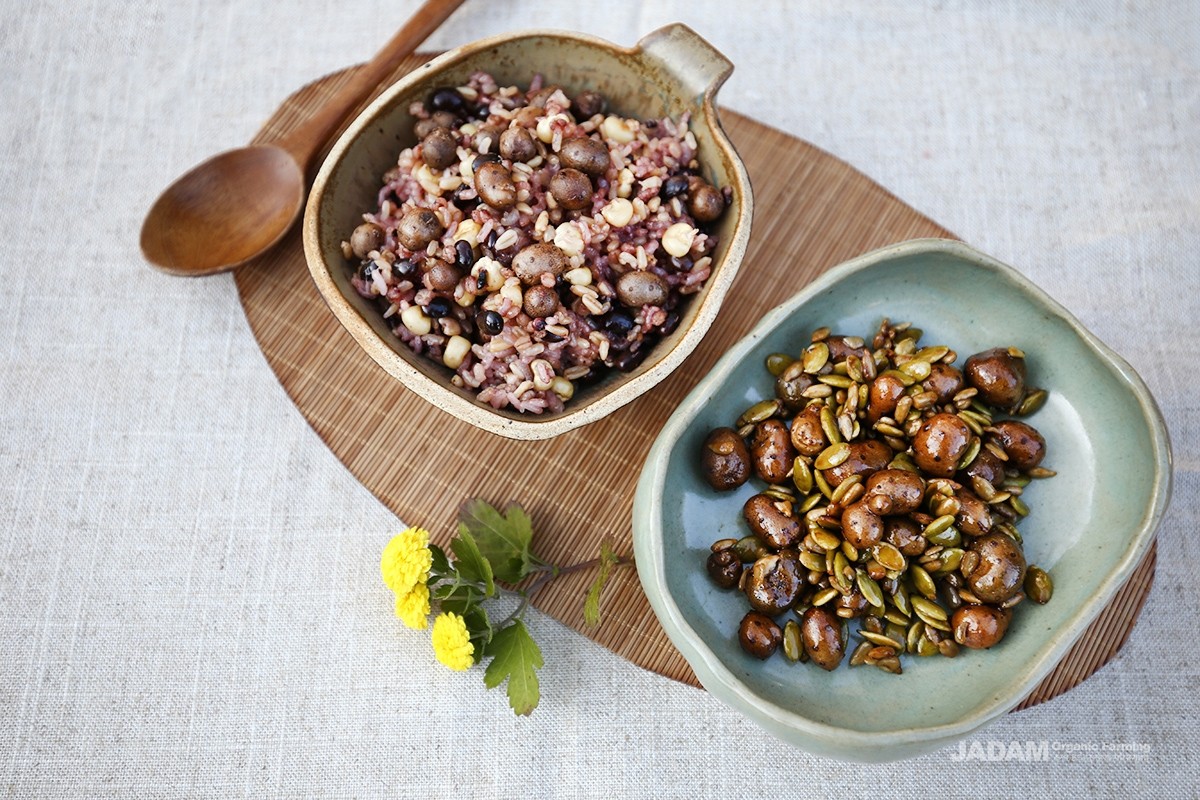
The tuber of Korean Yam (Dioscorea batatas) can be grated and mixed with milk or prepared as a salad. It may also be roasted, or lightly ground together with soaked rice to make porridge. The aerial bulbils (small tubers) can be stewed or cooked with rice to make nutritious meals.
It is effective in improving weak constituents, such as those with poor appetite, indigestion, or diarrhea caused by a weakened spleen and stomach. Regular consumption is believed to strengthen vitality and enhance stamina.
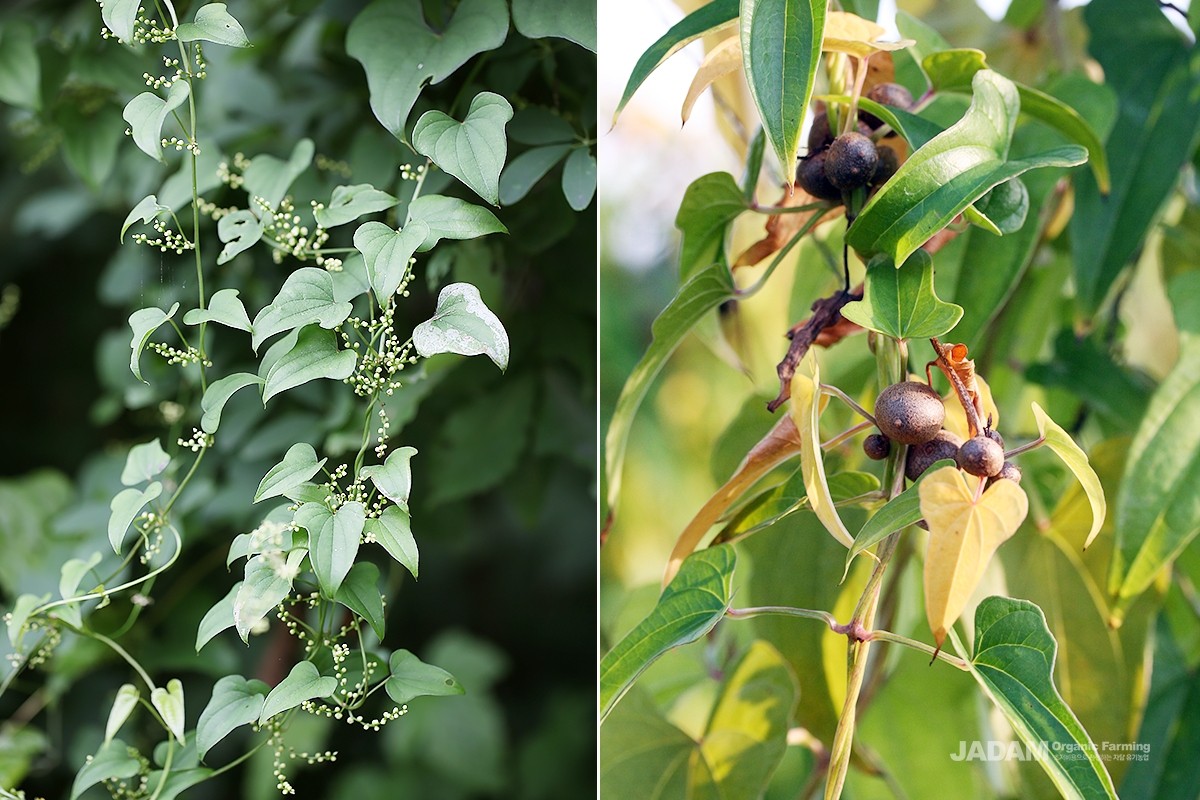
Korean Yam (Dioscorea batatas) is a perennial climbing plant that grows naturally in mountains throughout the country, and various cultivars are cultivated. The leaves are opposite or whorled. They are triangular or triangular-ovate, with the base heart-shaped like earlobes. The yam (D. japonica) has long oval or narrow triangular leaves with pointed tips, and the base is heart- shaped.
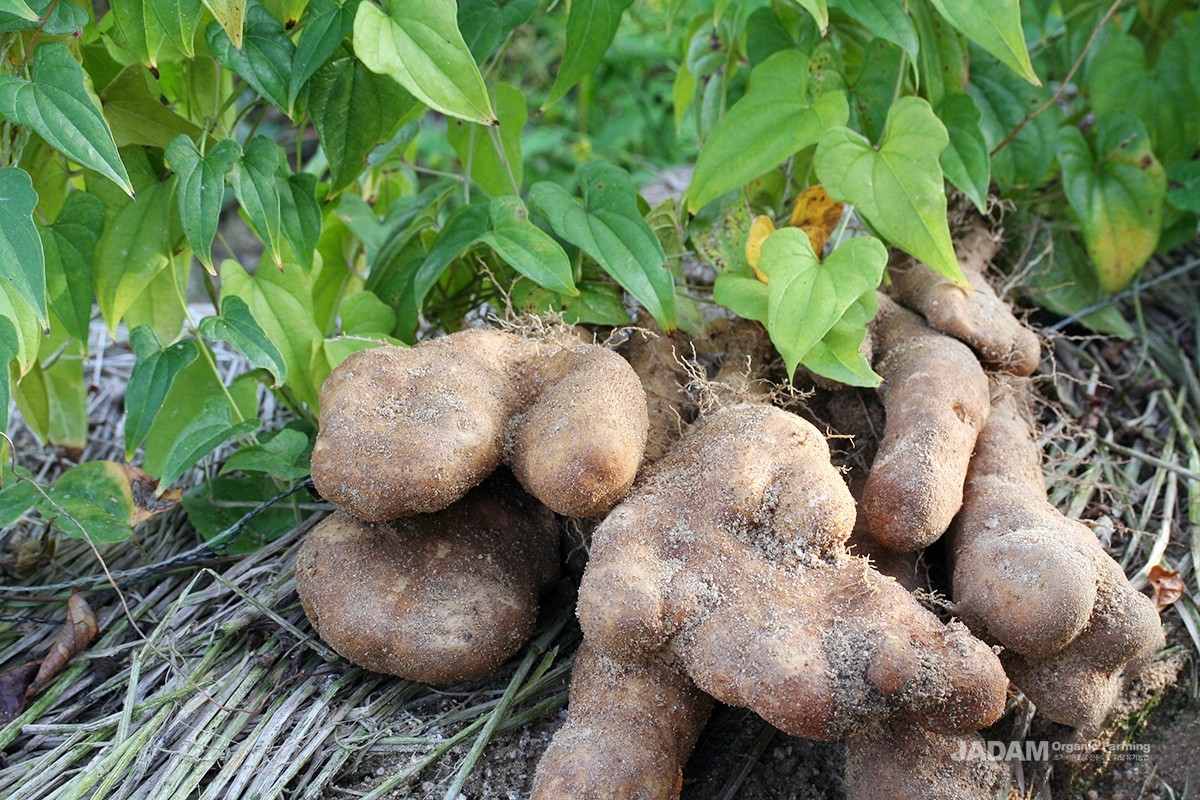
It is dioecious, flowering from June to July with white flowers borne in spike-like clusters without pedicels. Male inflorescences are erect, while female inflorescences droop downward. The flowers have six tepals. Male flowers have six stamens, and female flowers have a shoot style. The fruit is a capsule with three rounded wings. Bulbils develop in the leaf axils, and the underground tuber is club-chaped.
The tuber can be grated and mixed with mild to drink, or prepared as salad. It can also be roasted, lightly ground with soaked rice to make porridge, dried and powdered for consumption, or steeped in alcohol for extract. The bulbils from the leaf axils are also used in the same way. They can stewed, or cooked with rice.
In oriental medicine, the tuber is called Sanyak (山藥). It is mainly used to improve weak constitutions where the spleen and stomach are deficient, leading to poor digestion or diarrhea. For this reason, it is also called “eel of mountains".” Frequent consumption strengthens the kidneys and muscles, enhances vitality and stamina, adds luster to the skin, and improves complexion. It is also effective for diabetes patients.
The taste is sweet and the property is neutral. It is harvested in November to December, peeled, and dried in the sun or over low fire. According to the Comprehensive Chinese Materia Medica (Zhongyao Dacidian), “It strengthens the spleen and lungs, consolidates the kidneys, and replenishes essence. It treats diarrhea due to spleen deficiency, chronic dysentery, cough due to pulmonary tuberculosis, excessive thirst and urination with emaciation (diabetes, Xiaoke), nocturnal emission, and leukorrhea.”
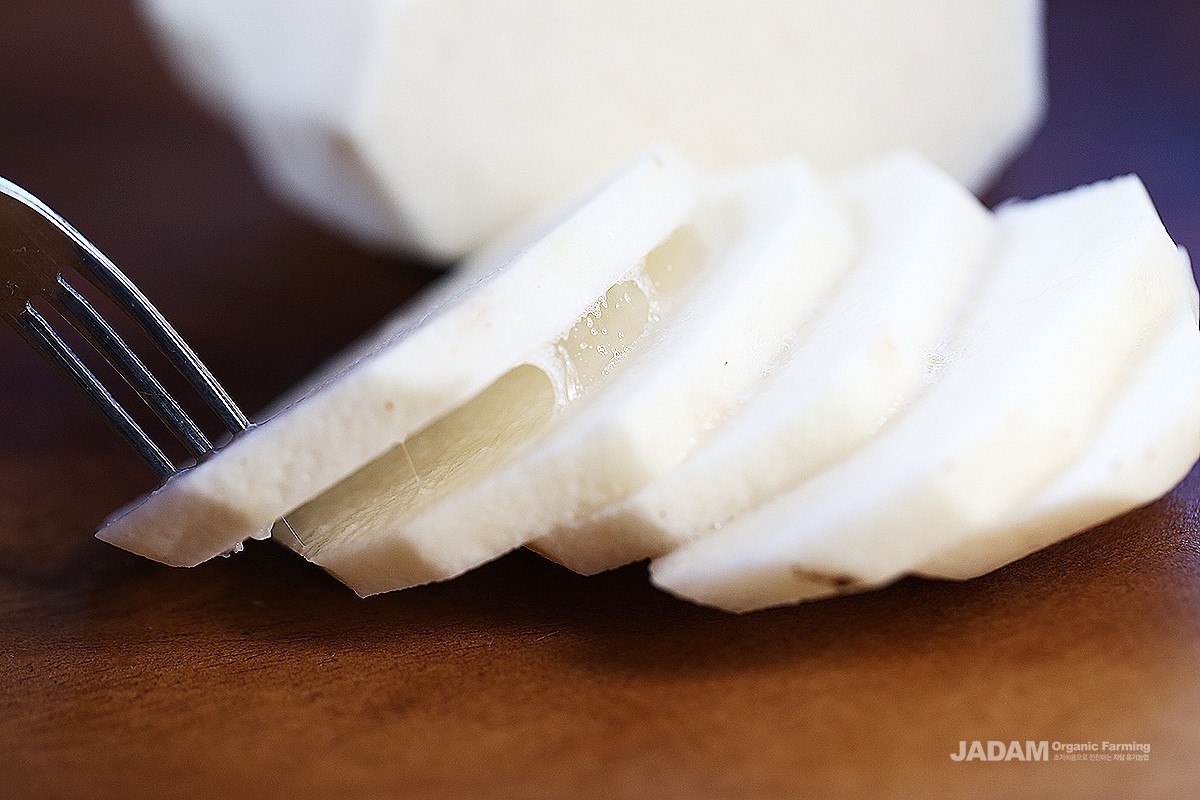
The tuber contains abundant starch, mucilage, glycoproteins, choline, free amino acids, and steroidal substances such as diosgenin. The slimy texture of the tuber is due to mucin, which is a globulin-mannan complex. Mucin promotes protein digestion and protects the stomach lining.
Diosgenin exists in the form of a steroid saponin called dioscin. Diosgenin plays a similar role to DHEA, which is used in the synthesis of sex hormones such as male and female hormones. It helps prevent or improve symptoms caused by hormone deficiency. It has tonic effects, enhances memory, improves the immune system, and provides other health benefits.
Propagation is carried out by bulbils or tubers. Bulbils are collected in autumn or the following spring and planted, while tubers are cut and planted in spring, similar to potatoes.
[Ma/ Korean Yam - Ways to Enjoy]
1. Grate the tuber and mix with milk to drink, or prepare as salad.
2. Roast, or lightly grind with soaked rice to make porridge.
3. Dry and powder for consumption, or steep in alcohol.
4. Cook bulbils in stews or with rice.