

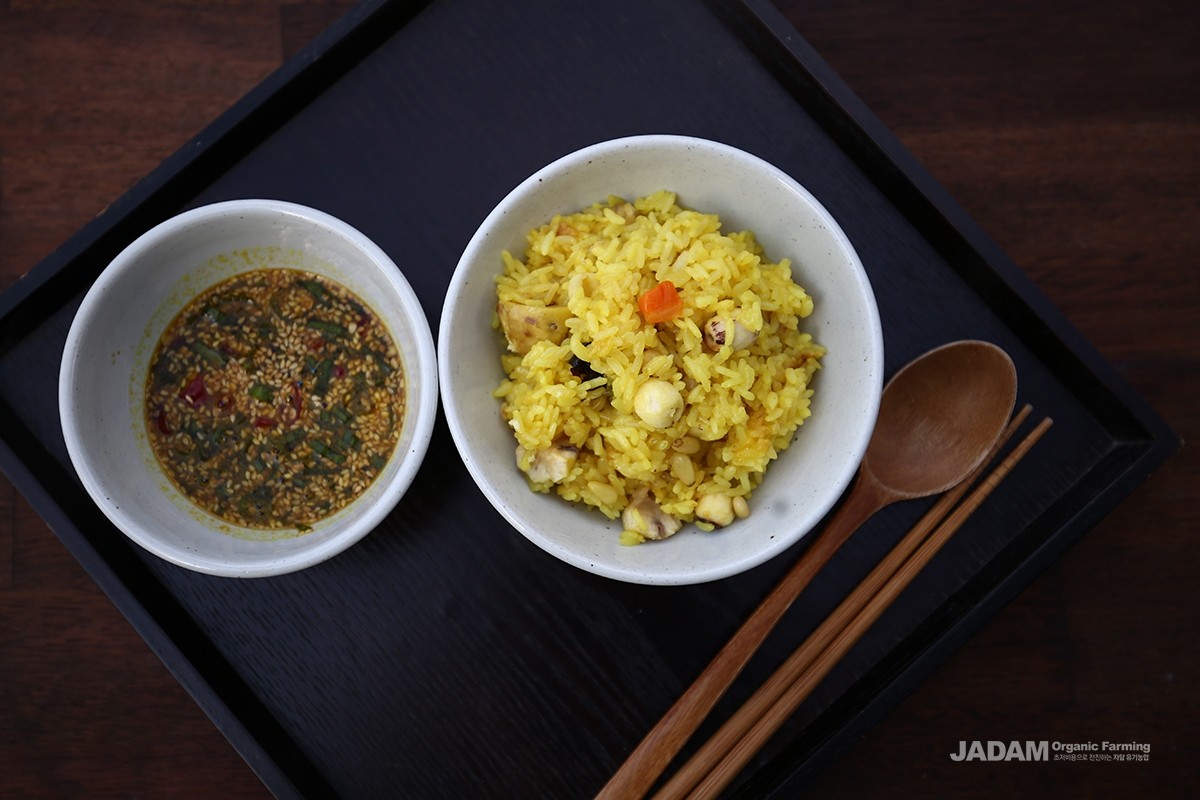
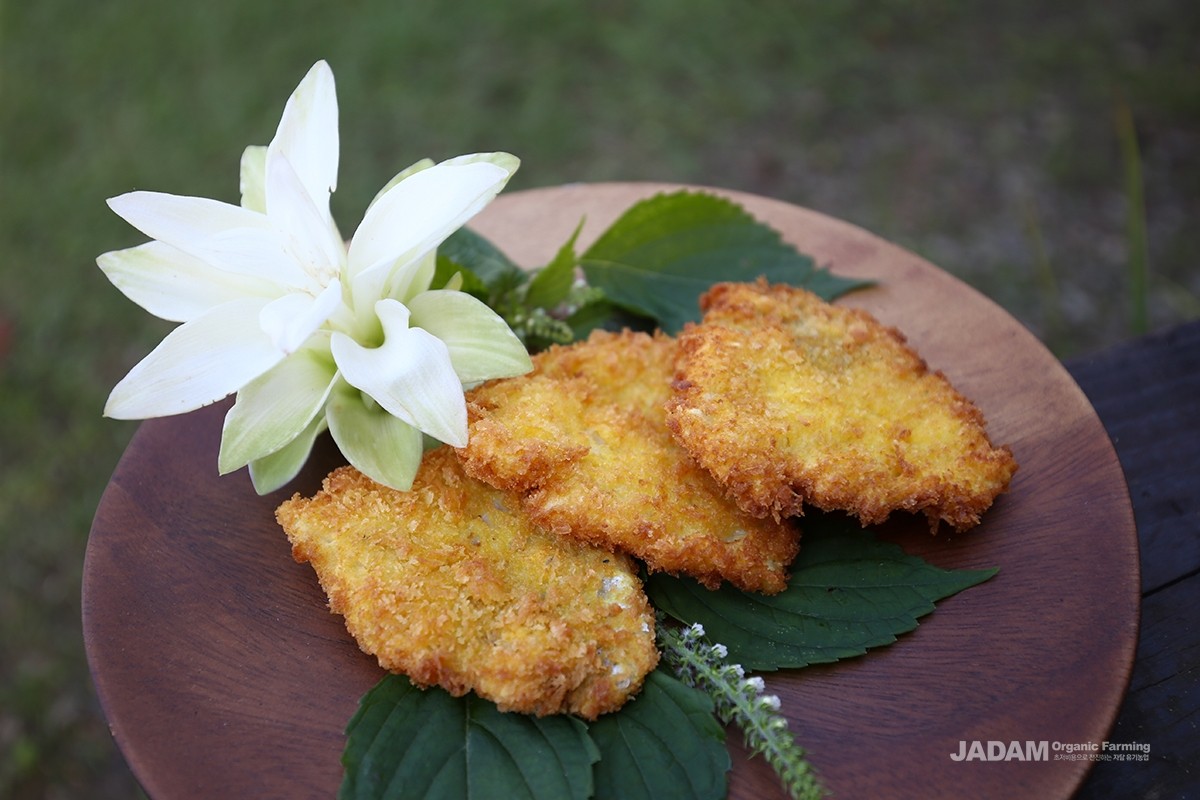
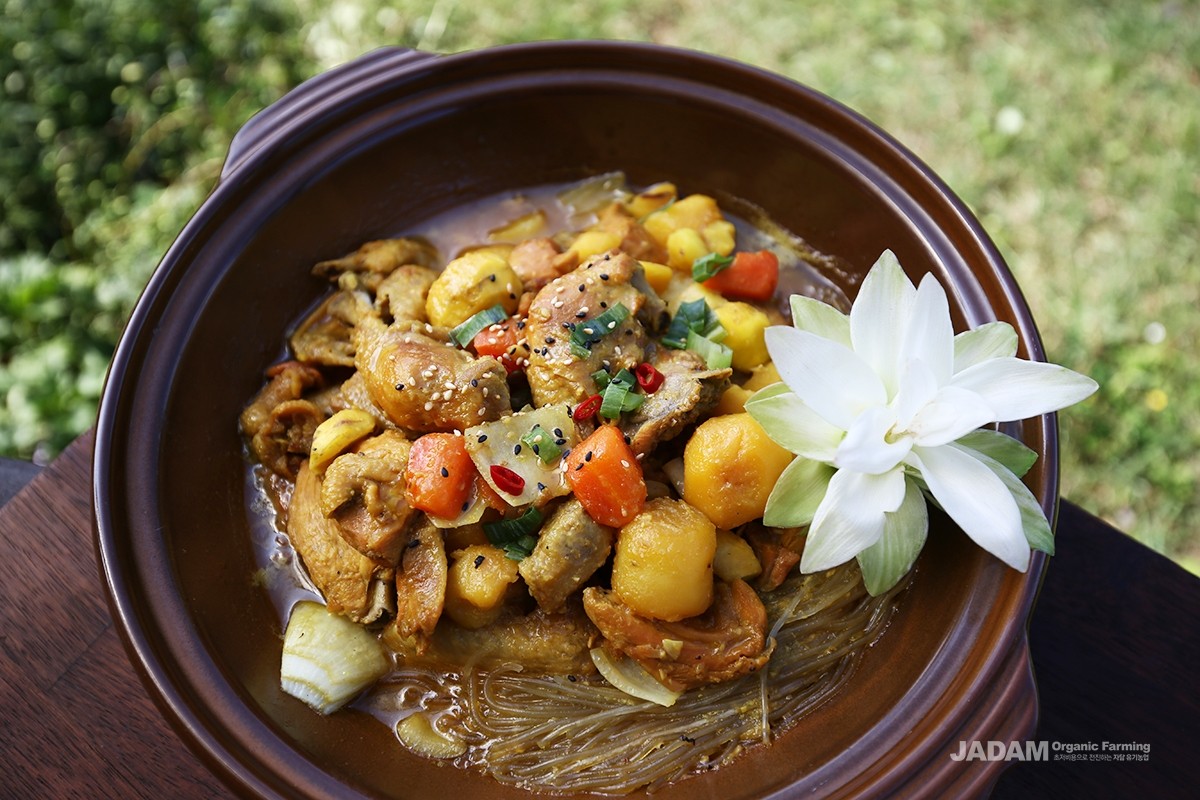
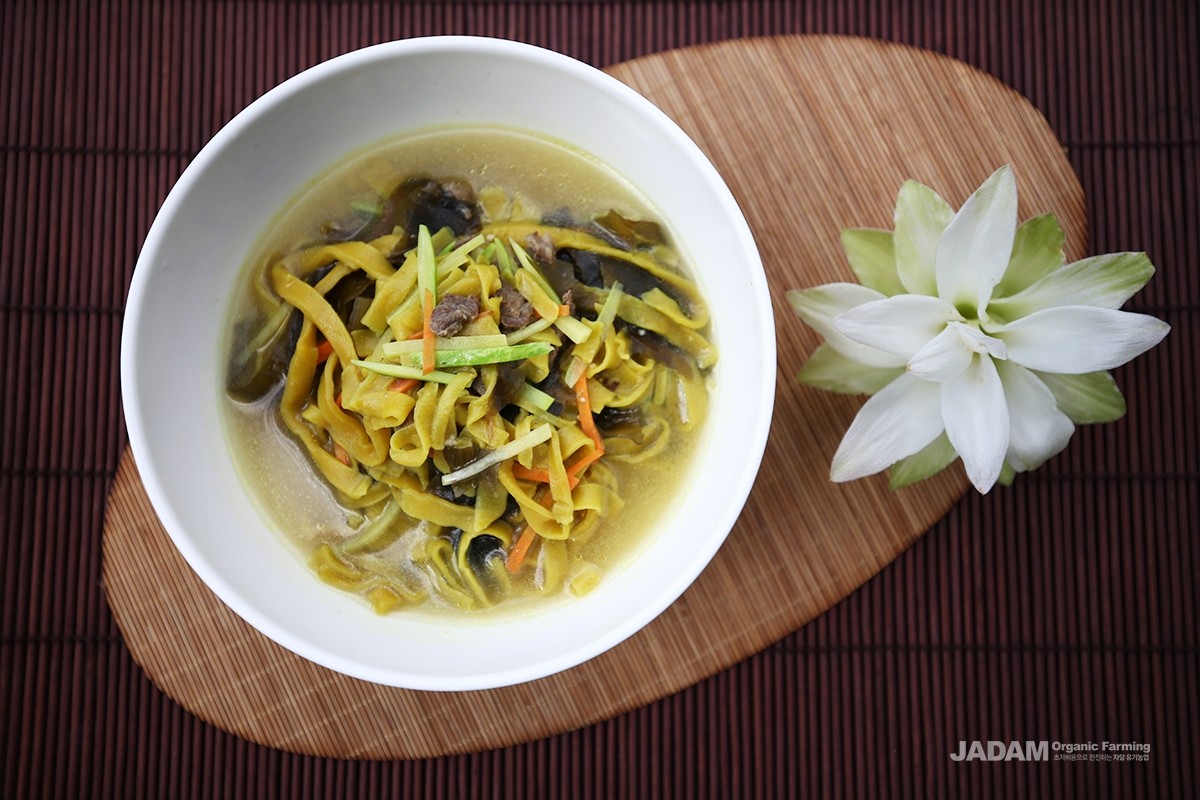
In November to December, when the leaves and stems wither, the rhizomes are harvested. They are dried and ground into powder, then used in rice, fritters, stews, and noodle dishes. In particular, when added to fish or meat dishes, turmeric removes unpleasant odors and enhances flavor. Its taste is pungent and slightly bitter, with a warm nature. It is known to “invigorate blood circulation, regulate qi, promote menstruation, and relieve pain.” The main active compound, curcumin, has anti-tumor, antioxidant, and anti-inflammatory effects.
Turmeric (Curcuma longa) is a perennial herb of the ginger family, native to subtropical regions such as India. It has long been cultivated across Asia as a natural dye, medicine, and food ingredient. From the reddish-orange rhizomes, broad leaves resembling those of canna emerge in clusters, reaching human height. The leaf veins are pronounced.
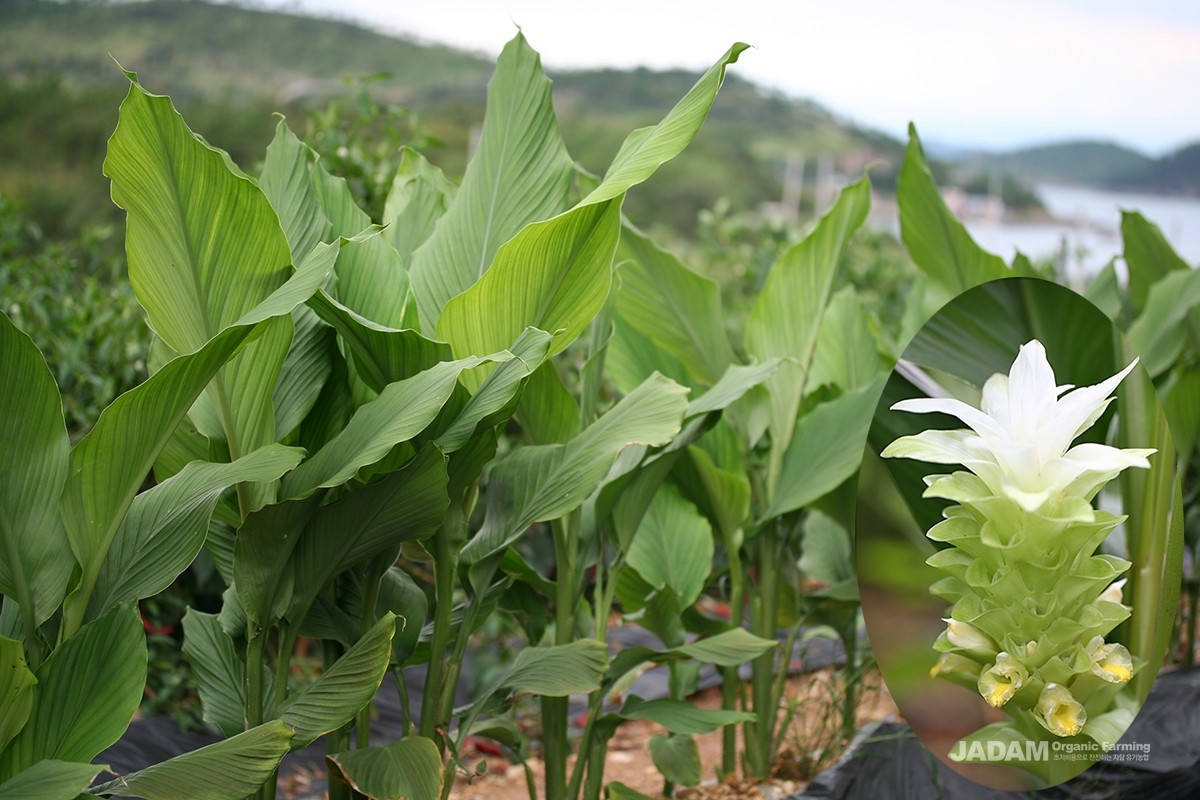
In early autumn, pale greenish-white flower spikes about 20 cm long appear, bearing light yellow flowers within bracts. In Korea, turmeric is often called ulgeum (鬱金), though strictly speaking, the species Curcuma aromatica—which produces pink flowers in spring—is traditionally referred to by that name. In traditional medicine, the dried tuberous roots of these plants are used, with some distinction made between turmeric and ulgeum.
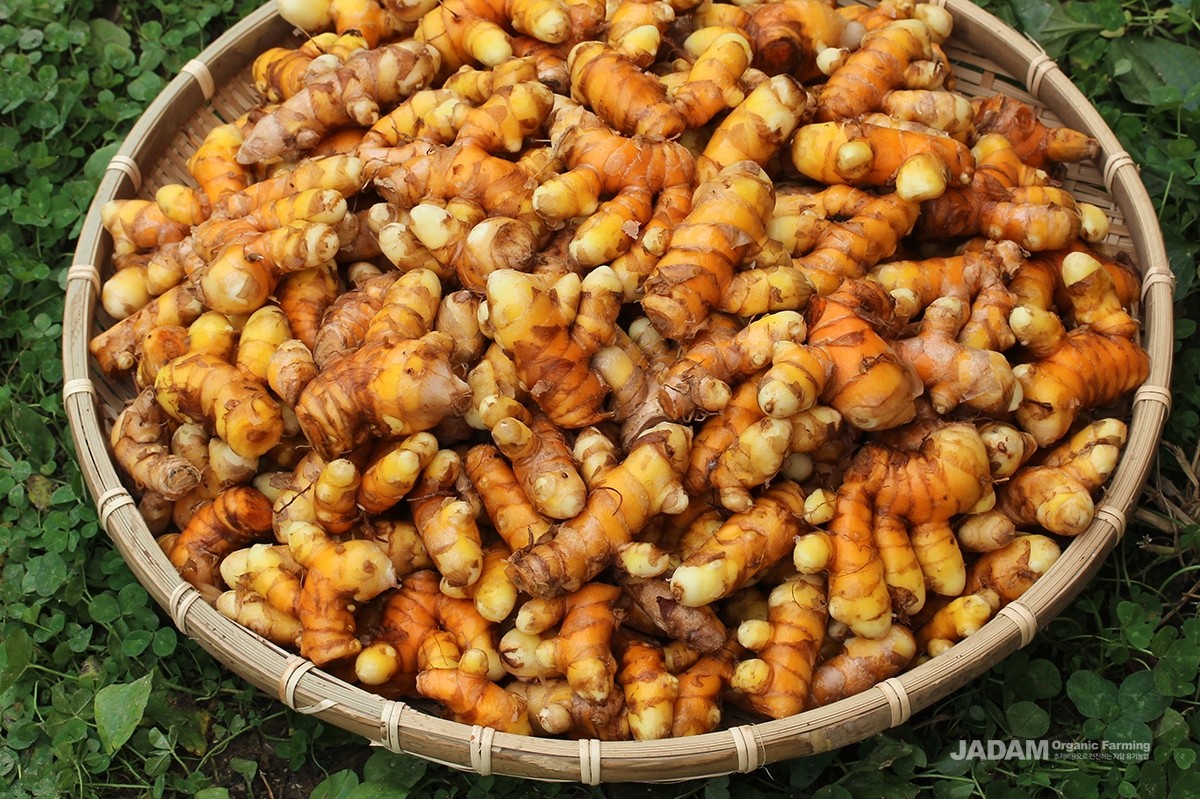
The rhizomes are harvested when the leaves and stems wither, around November to December. They may be mixed with sugar to make a fermented enzyme tonic, aged in liquor, or steamed and thinly sliced to brew as tea. When dried and powdered, they are added to rice, fritters, stews, or noodles. In particular, when used in fish or meat dishes, turmeric removes undesirable odors and enhances flavor. It is also a key ingredient in curry powder and is widely used as a natural dye.
Turmeric has a pungent and slightly bitter taste with a warm property. For medicinal use, fresh rhizomes are boiled thoroughly and dried in the sun. It is especially valued for breaking up blood stasis and promoting circulation. In traditional medicine, it is prescribed for abdominal pain caused by clotted blood, gynecological disorders such as amenorrhea, postpartum abdominal pain, and bruises or swellings. It is also considered effective for paralysis and joint pain caused by wind-cold-damp syndromes.
According to the Chinese Materia Medica (中藥大辭典), turmeric has the effects of “invigorating the blood, regulating qi, promoting menstruation, and relieving pain.” It is used for symptoms such as abdominal fullness and pain, kidney pain, gynecological masses, absence of menstruation due to blood stasis, postpartum abdominal pain, bruises, and small abscesses.
Turmeric rhizomes contain 4-6% essential oil, including turmerone, zingerene, phellandrene, cineole, sabinene, and borneol. Its most famous component, curcumin, is a yellow polyphenolic compound with strong anti-tumor, antioxidant, and anti-inflammatory properties. Turmerone is also reported to promote neural stem cell proliferation and enhance brain function.
Propagation is carried out by rhizomes. At harvest, select healthy rhizomes, sun-dry slightly, and store above 15℃ until spring, when they can be divided and planted. To encourage early sprouting, rhizomes can be pre-germinated in greenhouses or indoors before being transplanted to the field.
[Ways to Enjoy Turmeric (Ulgeum)]
1. Mix the rhizomes with sugar to make a fermented tonic, or age them
in liquor.
2. Steam and thinly slice, then brew as tea.
3. Dry and grind into powder, then use in rice, fritters, stews, or noodle
dishes.
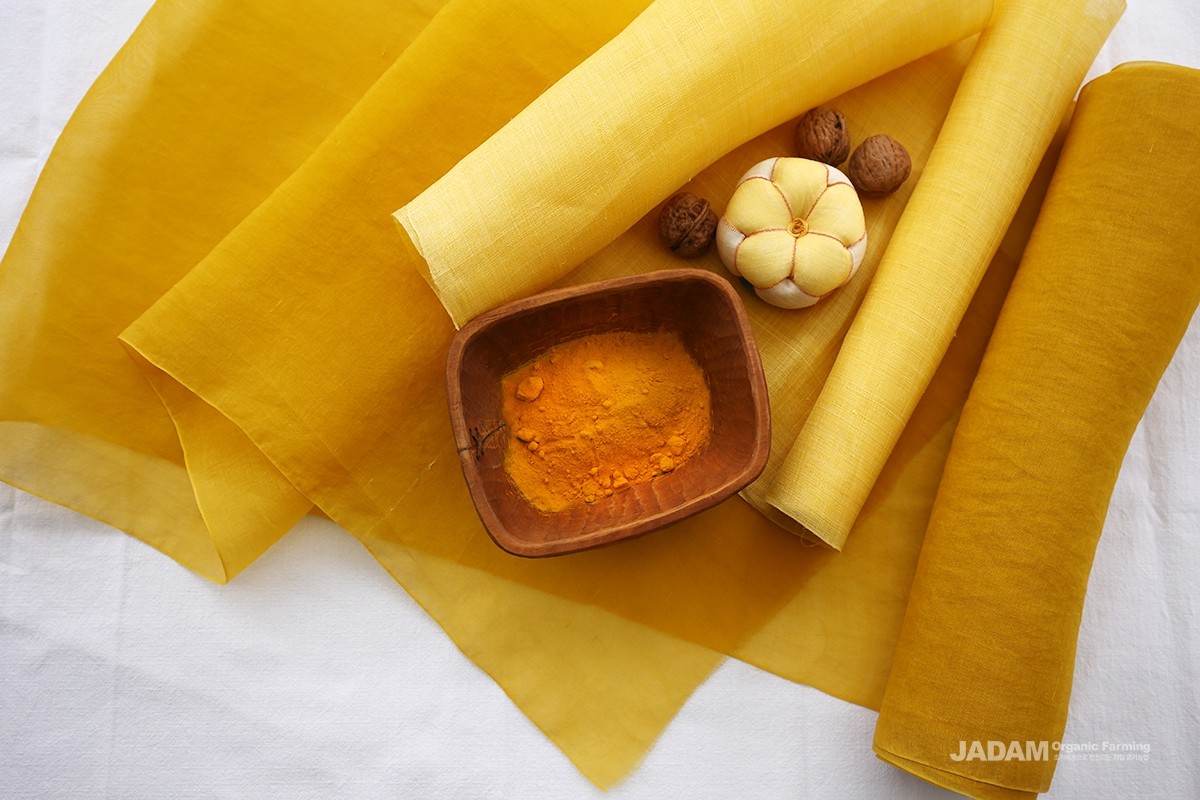
4. Use the powder as a natural yellow dye.