

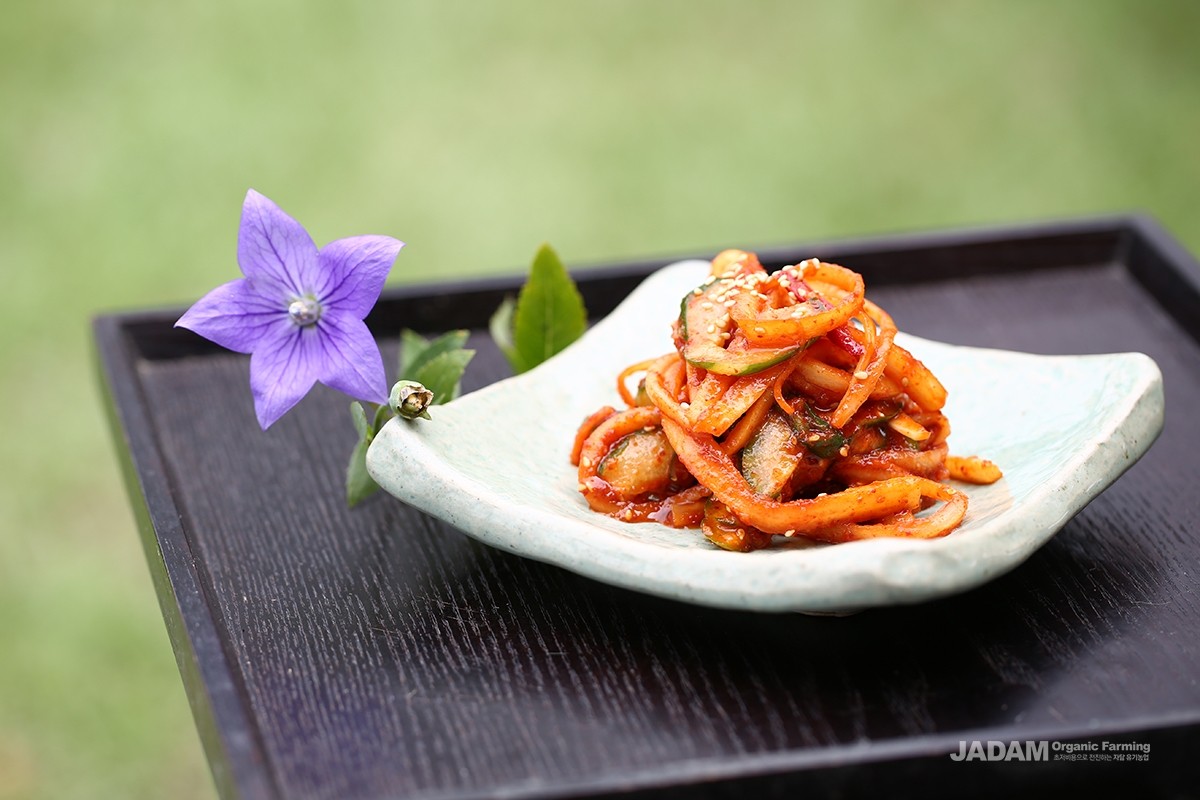
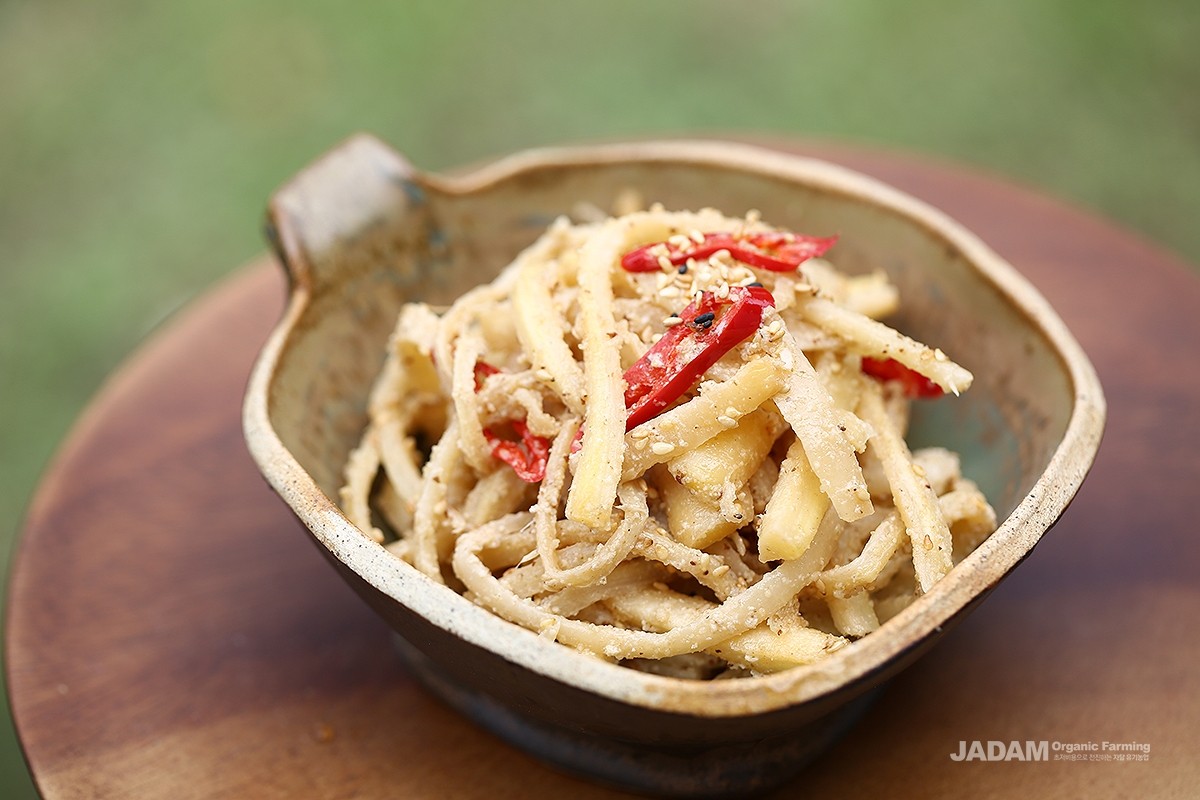
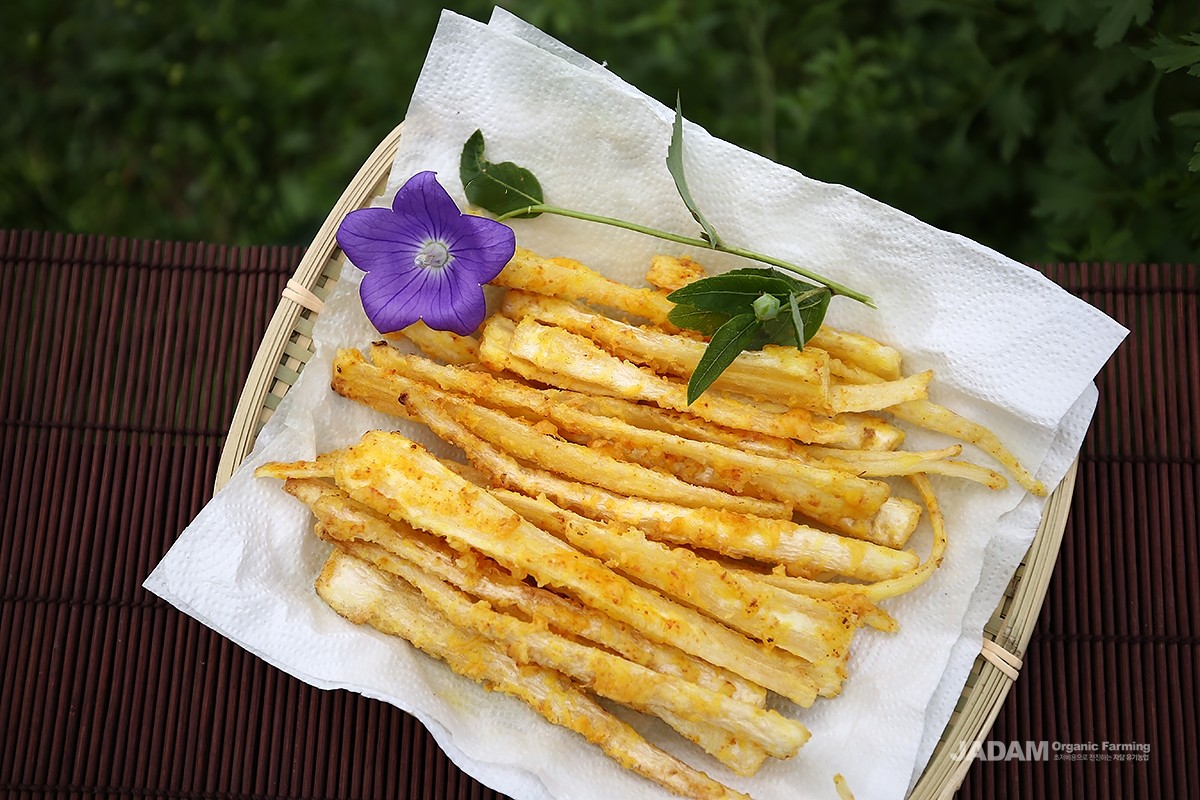
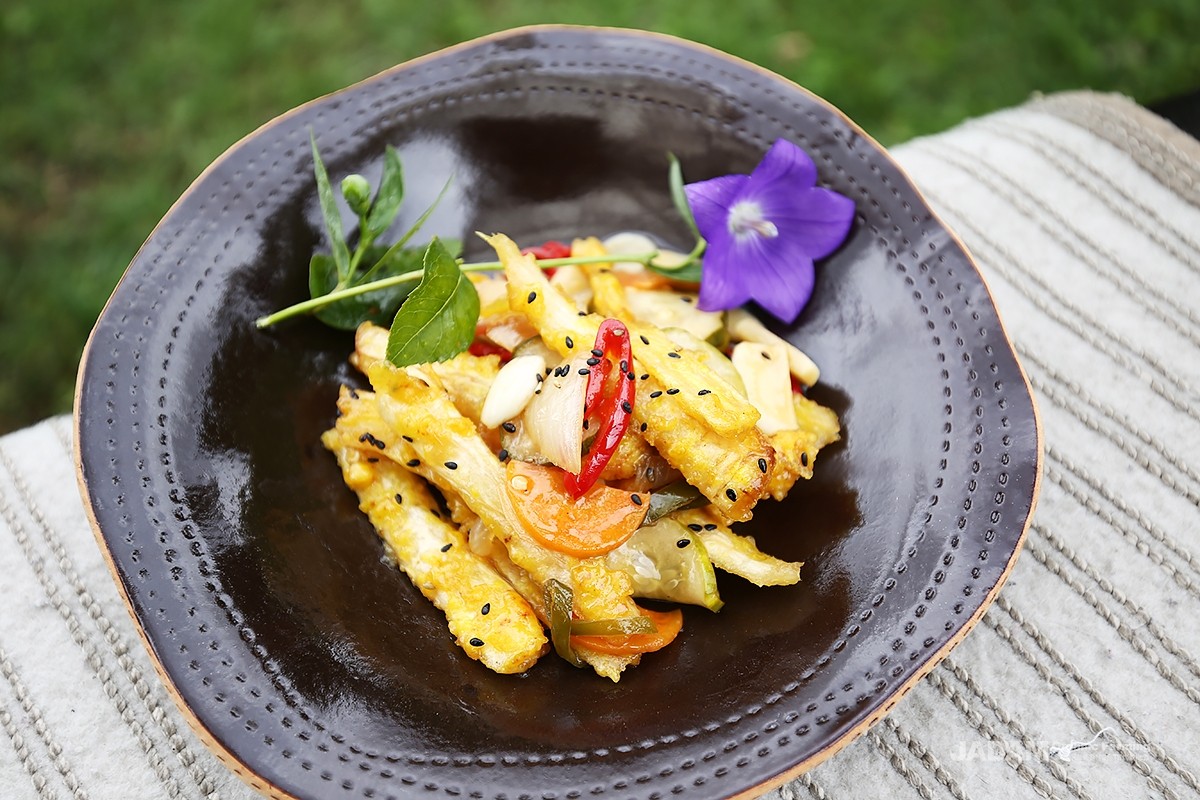
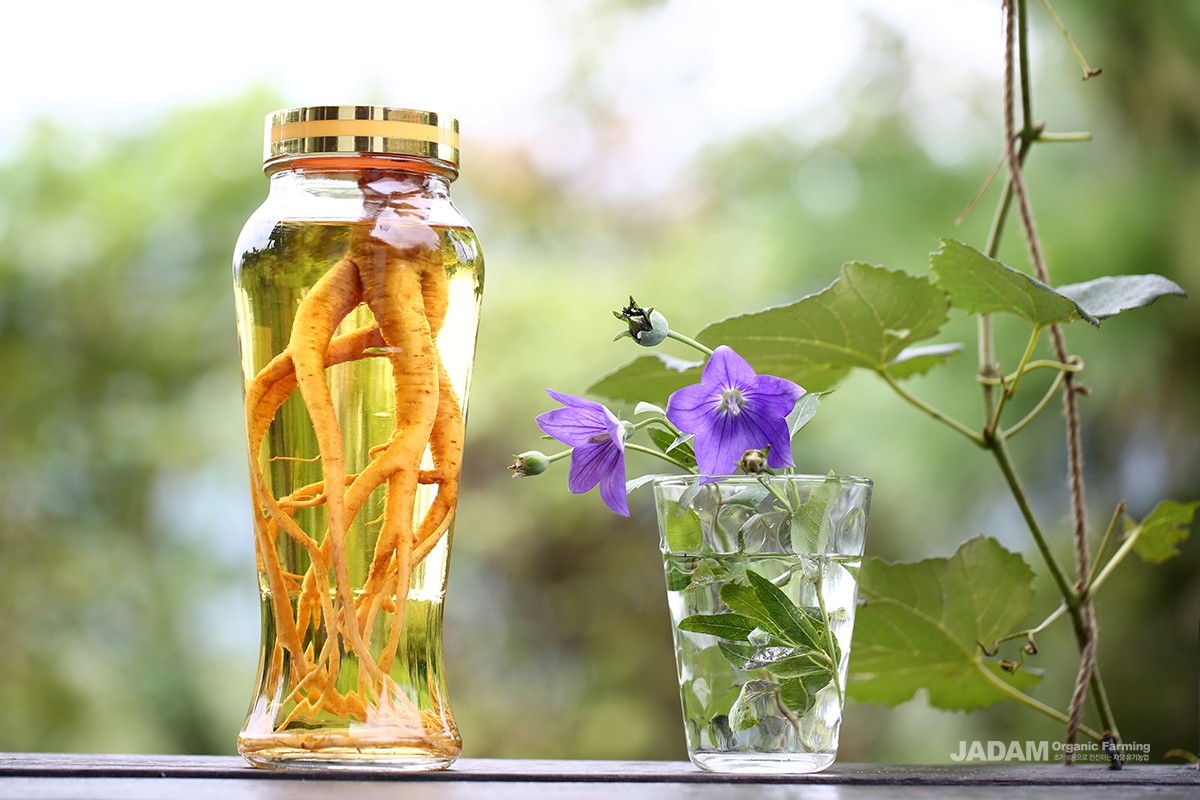
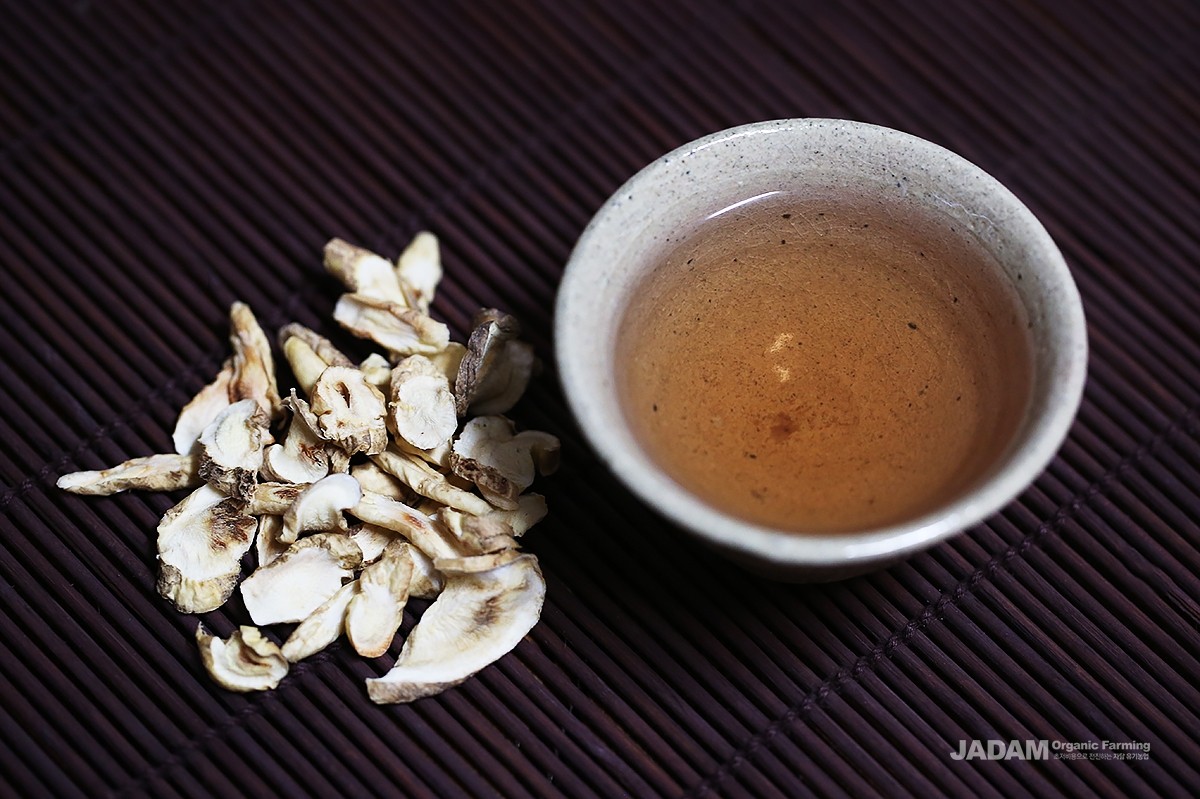
The root is mainly eaten as a seasoned salad or vegetable side dish. It can also be deep-fried, or pickled in gochujang (a traditional Korean red chili paste) to make jangajji (Korean-style pickles). In addition, the root may be prepared as jeonggwa (a traditional Korean candied fruit- or root-based confection) or sanjeok (Korean-style skewered meat and vegetables, sometimes including roots). It is also boiled down into doraji-cheong (a concentrated syrup made from bellflower roots, used as a traditional remedy and sweetener), infused in liquor, or dried and roasted to brew as tea. The root, called Gilgyeong (桔梗) in traditional Korean medicine, is also used as an herbal remedy. It is regarded as beneficial for colds, relieving phlegm, easing coughs, and alleviating shortness of breath.
Balloon Flower (Platycodon grandiflorum) is a perennial herb in the bellflower family, found growing wild in mountains and fields or cultivated. It grows 40-100 cm tall with thick roots. The stem stands upright and exudes a white sap when cut. The leaves are alternate, ovate, and toothed at the edges, with green surfaces and bluish-gray undersides.
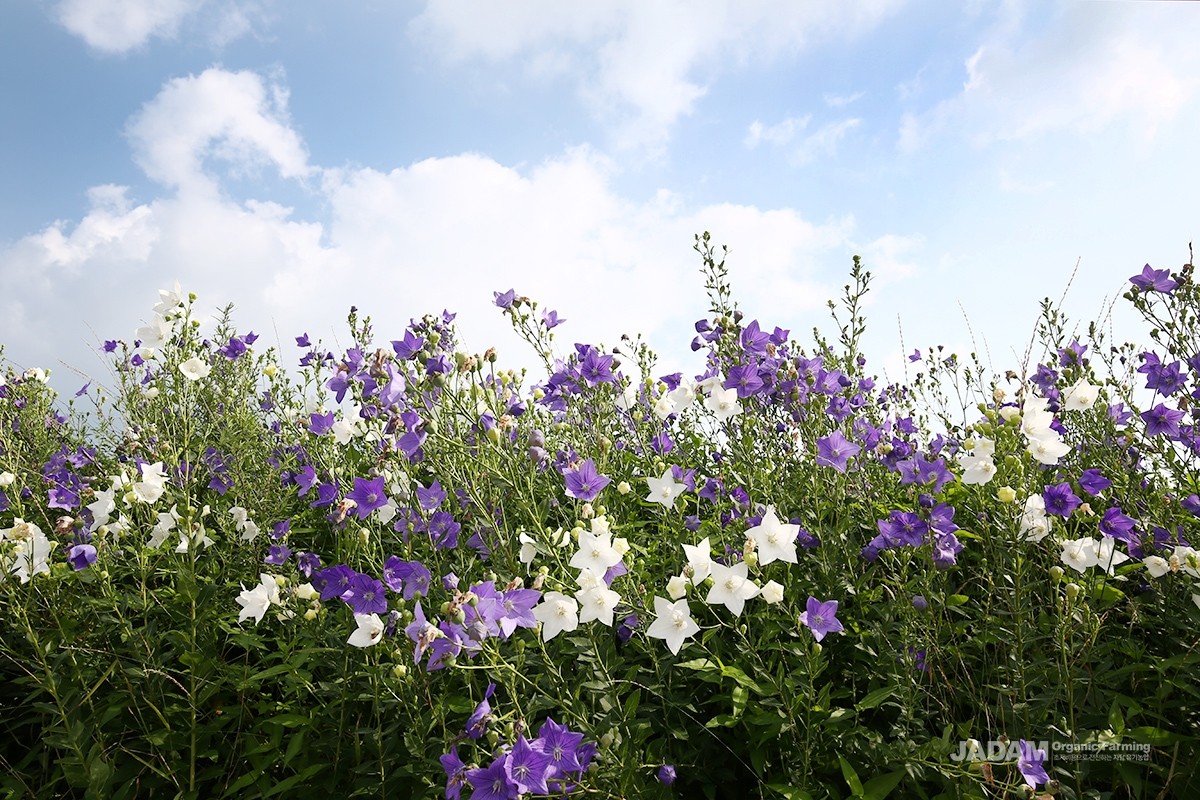
From July to August, purple or white flowers bloom facing upward. The corolla is shaped like a paper balloon, splitting into five broad lobes. One pistil is surrounded by five stamens, and when the stamens wither, the stigma divides into five lobes. By September to October, round seed capsules mature, releasing fine dust-like seeds.
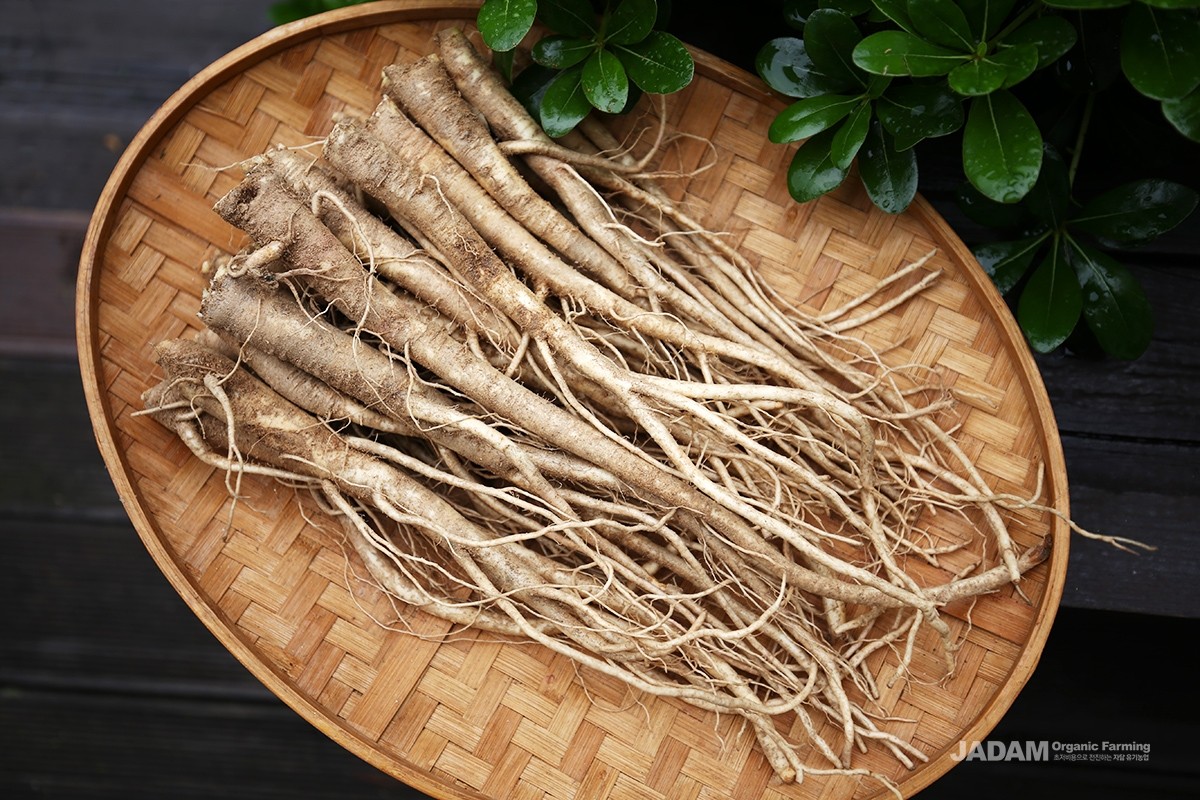
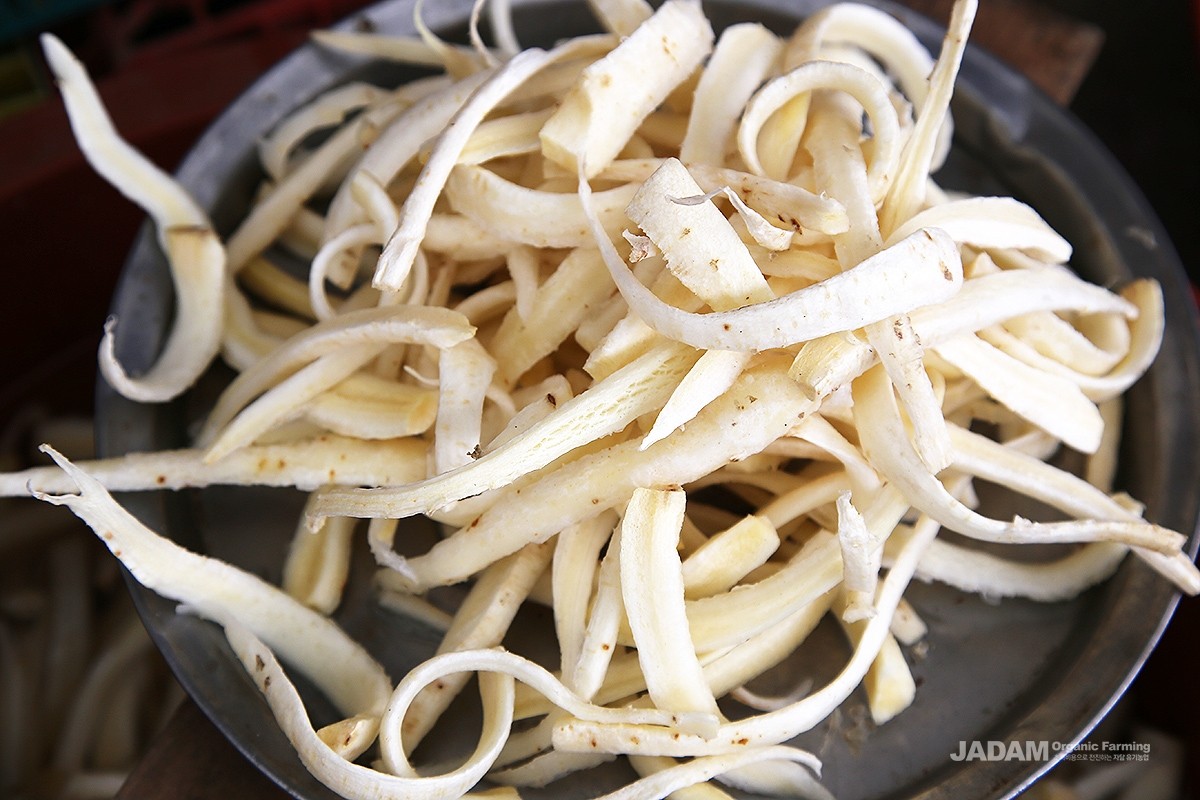
The young shoots are blanched and seasoned as a vegetable side dish. The roots are peeled, thinly sliced, and soaked in water to remove bitterness, then eaten fresh, seasoned as salads, or blanched and dressed. They may also be deep-fried, pickled in gochujang (Korean red chili paste) to make jangajji (Korean-style pickles), prepared as jeonggwa (a traditional Korean candied root or fruit snack), or skewered with beef and vegetables to make sanjeok (Korean-style skewers). The roots, stems, and leaves can be mixed with sugar to make a natural ferment, or boiled down into doraji-cheong (a traditional syrup used as both a sweetener and a remedy for coughs). They are also infused in liquor or dried and roasted to make tea.
The root, called Gilgyeong (桔梗) in traditional medicine, is harvested in spring and autumn and sun-dried. Its taste is pungent and slightly bitter, with a neutral property. It has expectorant, antitussive, antibacterial, hypoglycemic, and hemolytic effects. It is used to treat coughs with phlegm due to colds, sore throats, chest tightness, and side pain.
The main components include triterpenoid saponins such as platycodigenin, platycodin, polygalaic acid, and platycogenic acid, which give the root its slightly bitter and astringent taste. These saponins increase bronchial secretions, making phlegm easier to expel, and protect the bronchial lining to suppress coughing. The saponin content is highest in two-year-old roots and decreases after the third year. Other compounds include α-spinasterol, betulin, and inulin.
According to the Dictionary of Oriental Medicine, balloon flower “removes phlegm, stops coughing, clears lung qi, and drains pus. Its saponins stimulate bronchial secretions to dissolve phlegm. It is used for cough with phlegm, shortness of breath, chest pain, hoarseness, sore throat, abscesses, bronchitis, bronchiectasis, and laryngopharyngitis. The usual dosage is 6-12 g, taken as a decoction, pill, or powder.”
Propagation is by seed. From March to May, seeds are mixed with fine sand, broadcast-sown, covered lightly with soil, mulched with rice straw, and watered well.
[Ways to Enjoy Balloon Flower]
1. Blanch young shoots and season them as a vegetable dish.
2. Slice the roots, soak in water, and prepare as fresh salads or
blanched side dishes.
3. Deep-fry the roots, pickle them in gochujang (red chili paste)
to make jangajji, or prepare them as jeonggwa (candied snack)
or sanjeok (skewers).
4. Mix roots with sugar to make a natural ferment, or boil them down
into doraji-cheong (syrup with medicinal and culinary uses).
5. Infuse roots in liquor or dry and roast them for tea.