

The leaves and stems are aromatic and tender, making them popular as a vegetable. They are mainly eaten as wraps or in salads, lightly blanched and seasoned as namul, or added to soups and stews. They can also be pickled, or stir-fried with meat or fish. They are rich in vitamin A, vitamin C, potassium, and beta-carotene with antioxidant effects. They help relieve stress, promote mental relaxation, and are also beneficial in preventing high blood pressure.
Japanese parsley (Mitsuba), also known in Korean as Bandinamul, grows in forests or along forest edges in semi-shaded, slightly moist areas. The plant grows 30–60 cm tall with upright, hairless stems. Its trifoliate leaves are glossy on the underside, alternate along the stem, and have long petioles.
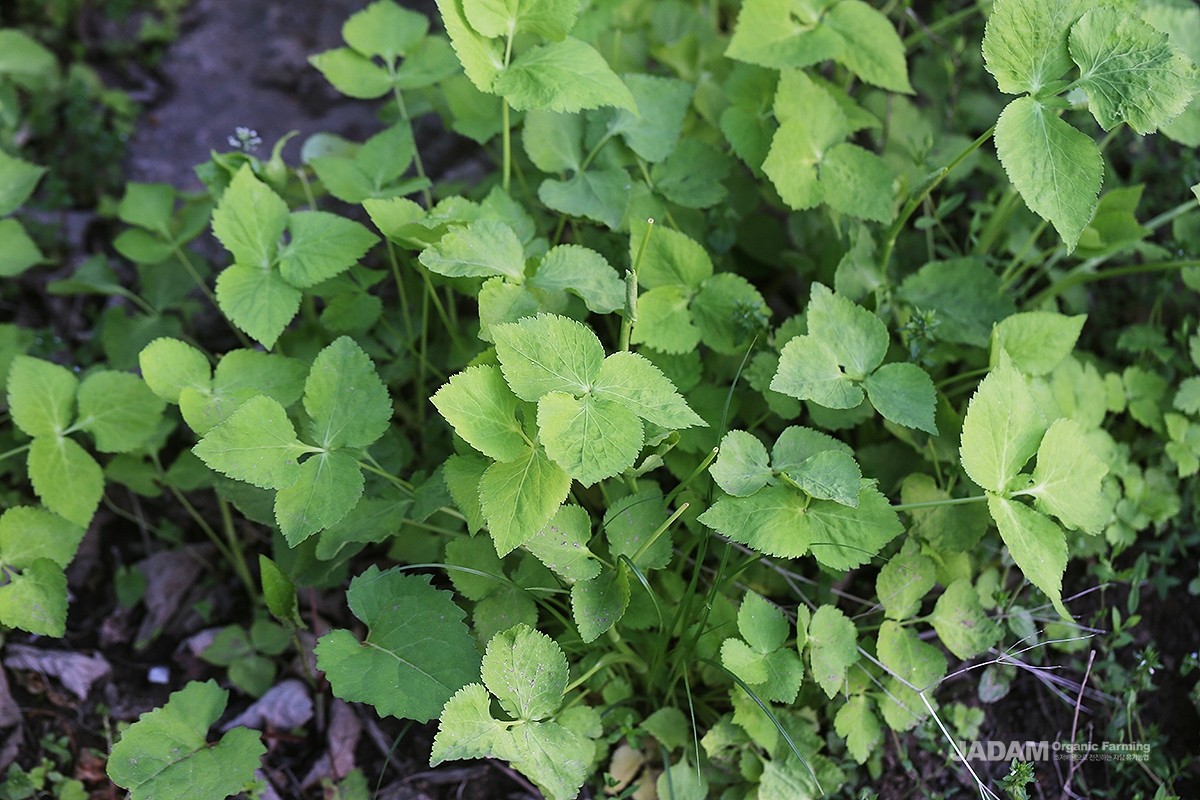
From June to July, very small white flowers bloom in clusters of 3–5. The pedicels are erect and vary in length. Each flower has five petals whose tips curve inward. The fruit is hairless, schizocarpic, and ripens black from August to September.
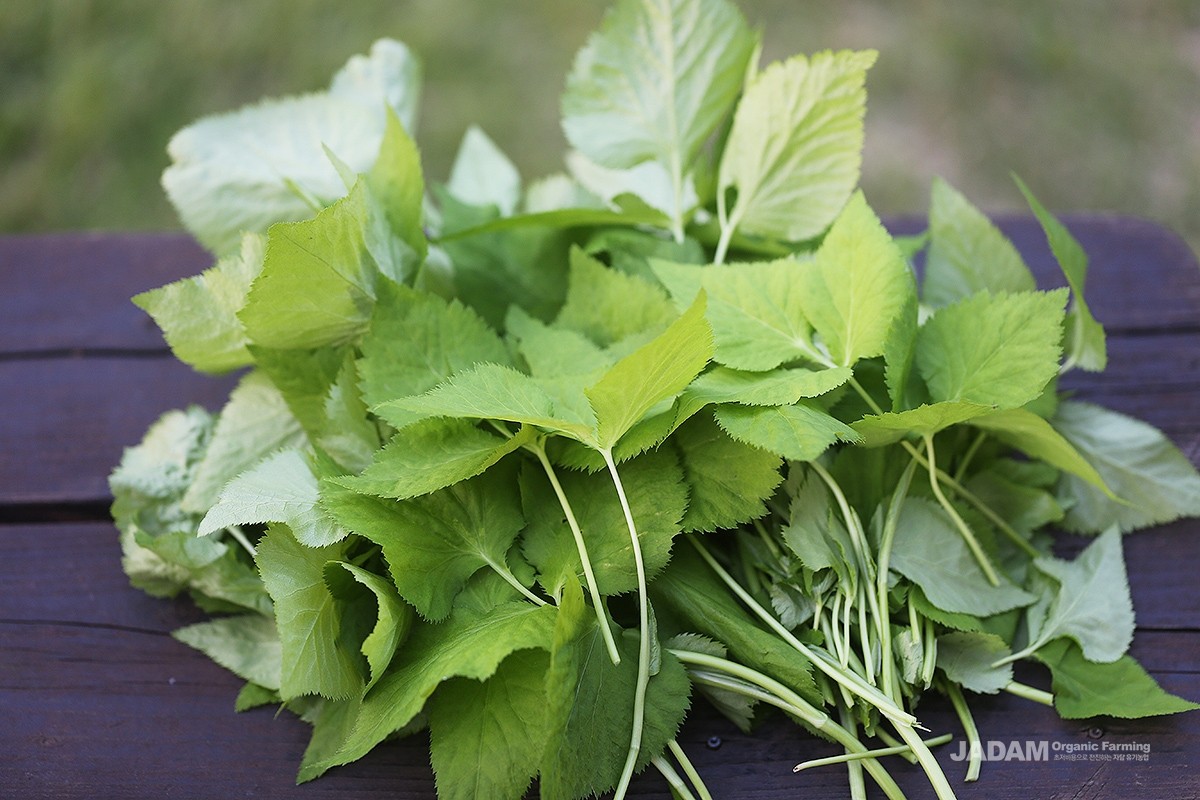
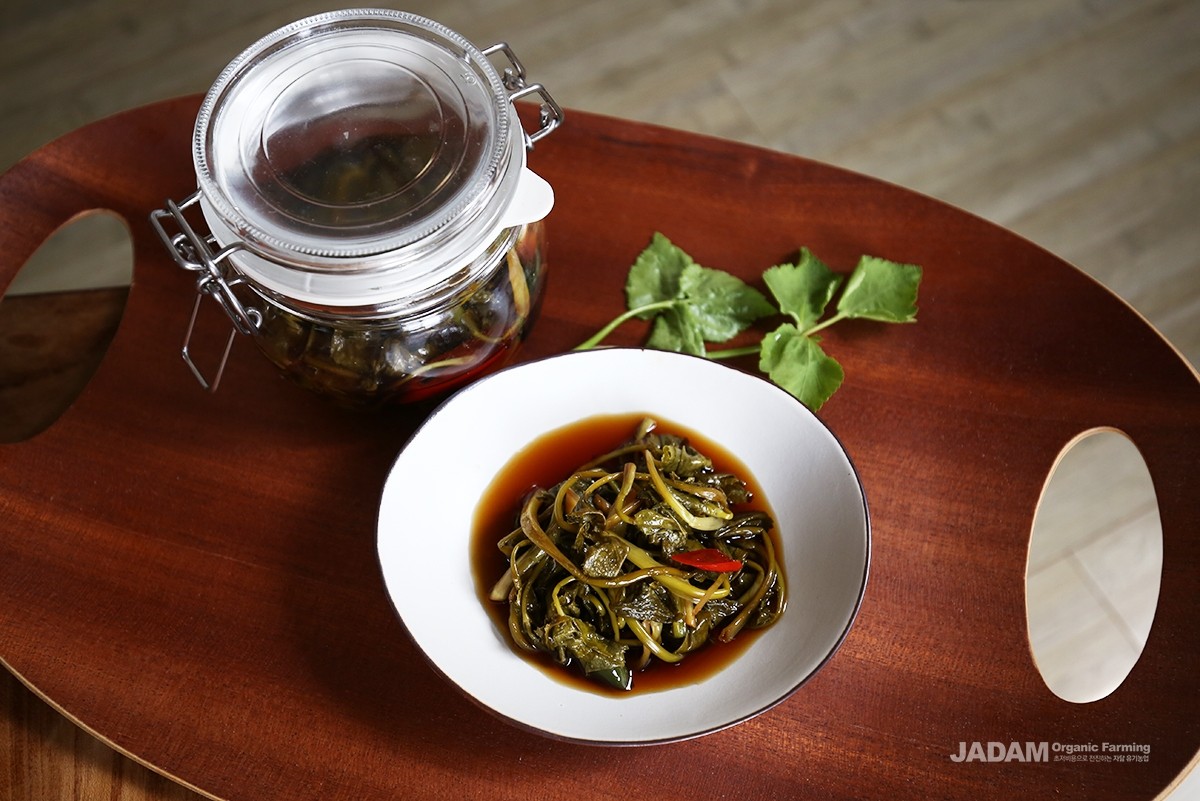
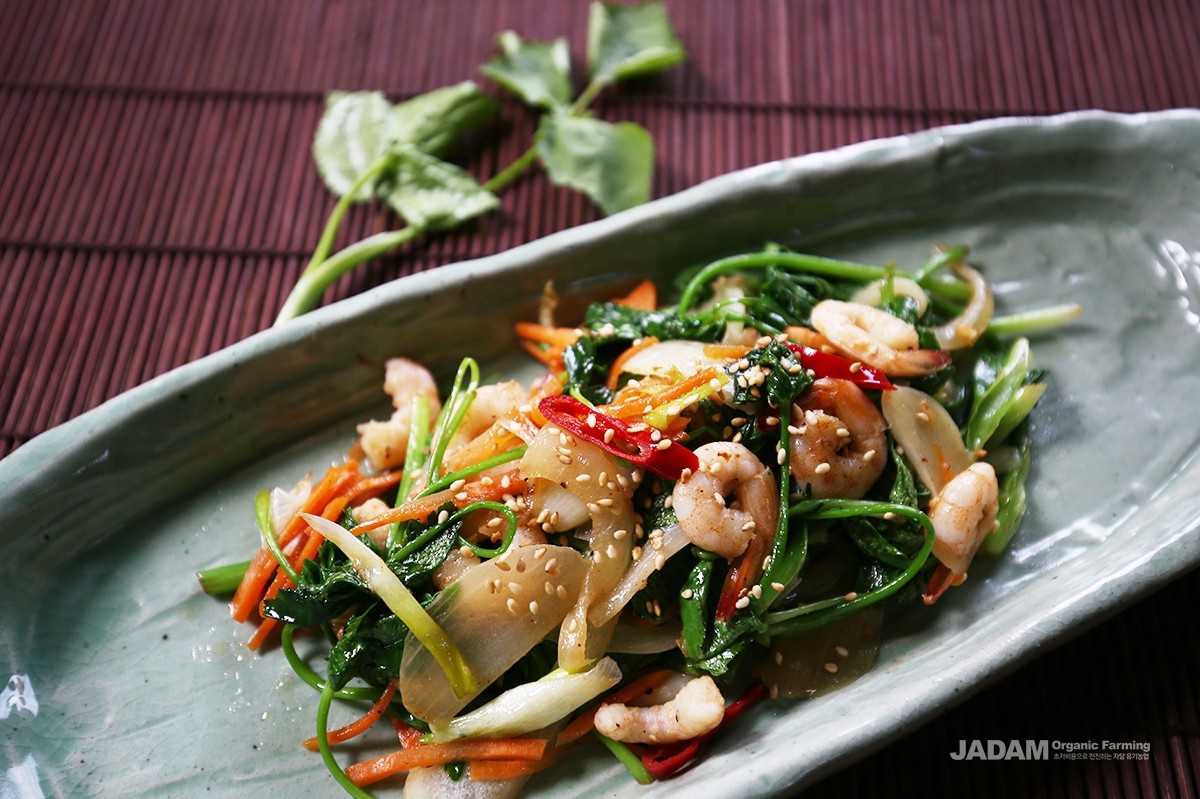
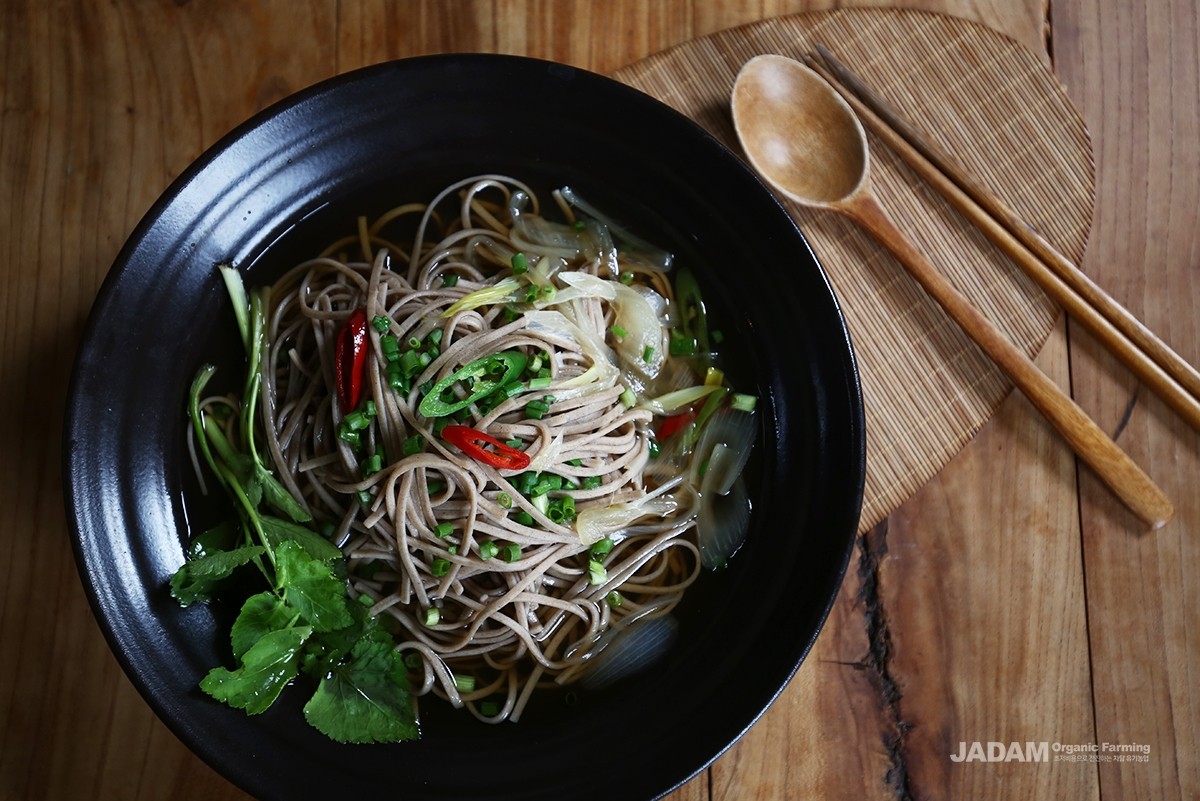
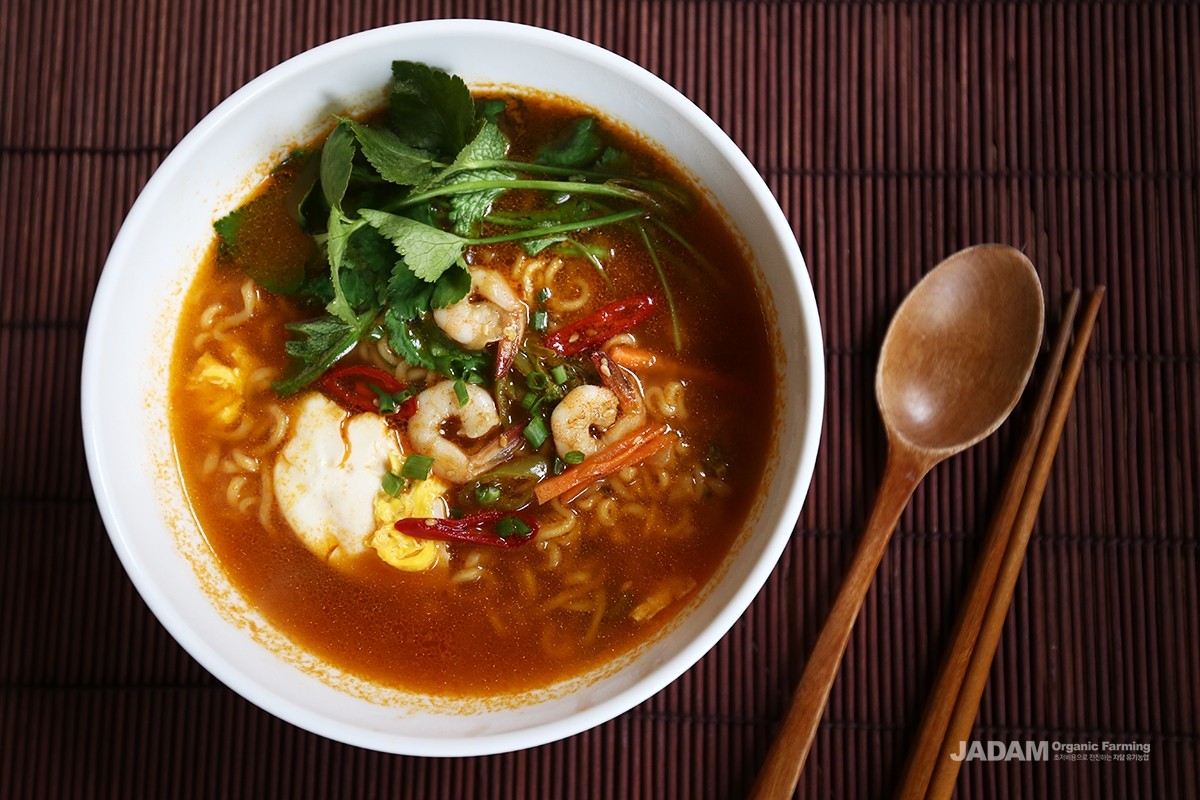
The leaves and stems are aromatic and tender, making the plant popular as an edible green. In markets, “Chamnamul” (참나물) often sold is actually Japanese parsley cultivated from seeds imported from Japan. It is eaten as wraps or in salads, lightly blanched and seasoned as namul, or added to soups and stews. Even a simple bowl of ramen becomes more fragrant with Mitsuba. It can also be pickled or stir-fried with meat or fish. When blanching, briefly dip the leaves into boiling water and immediately rinse in cold water; this enhances the texture and brightens the color.
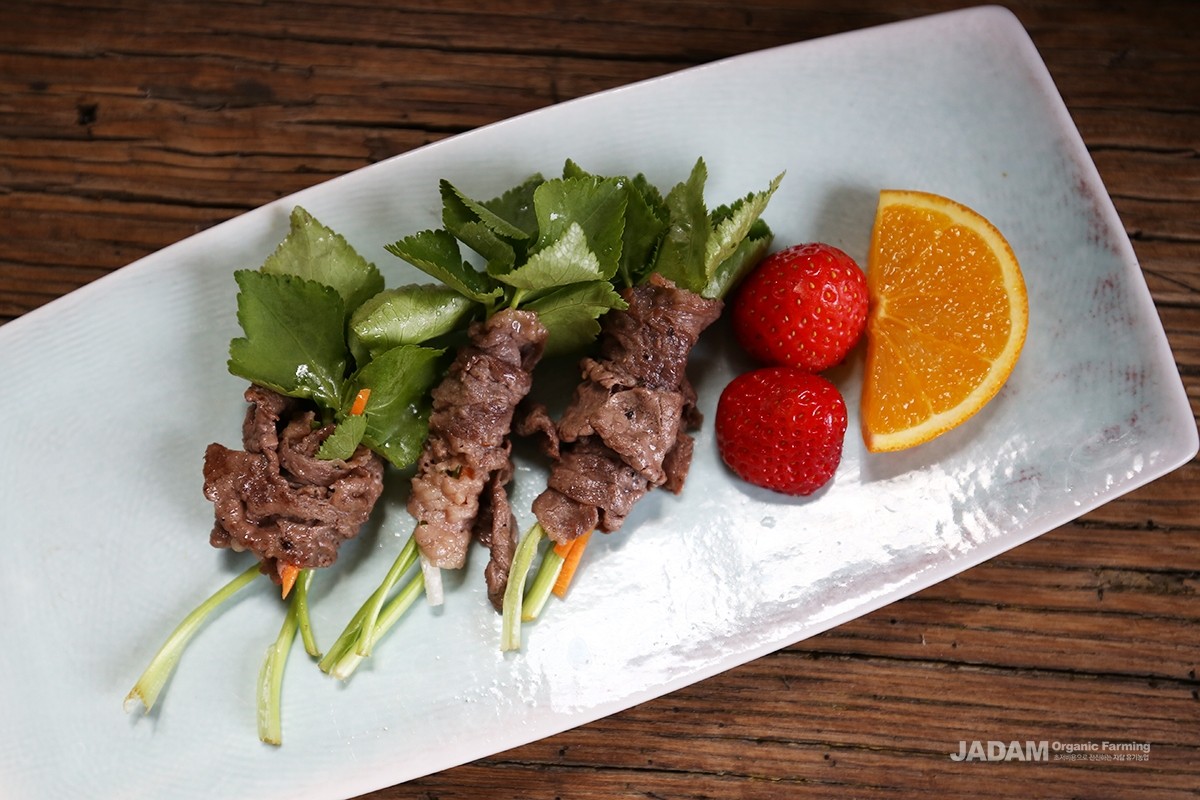
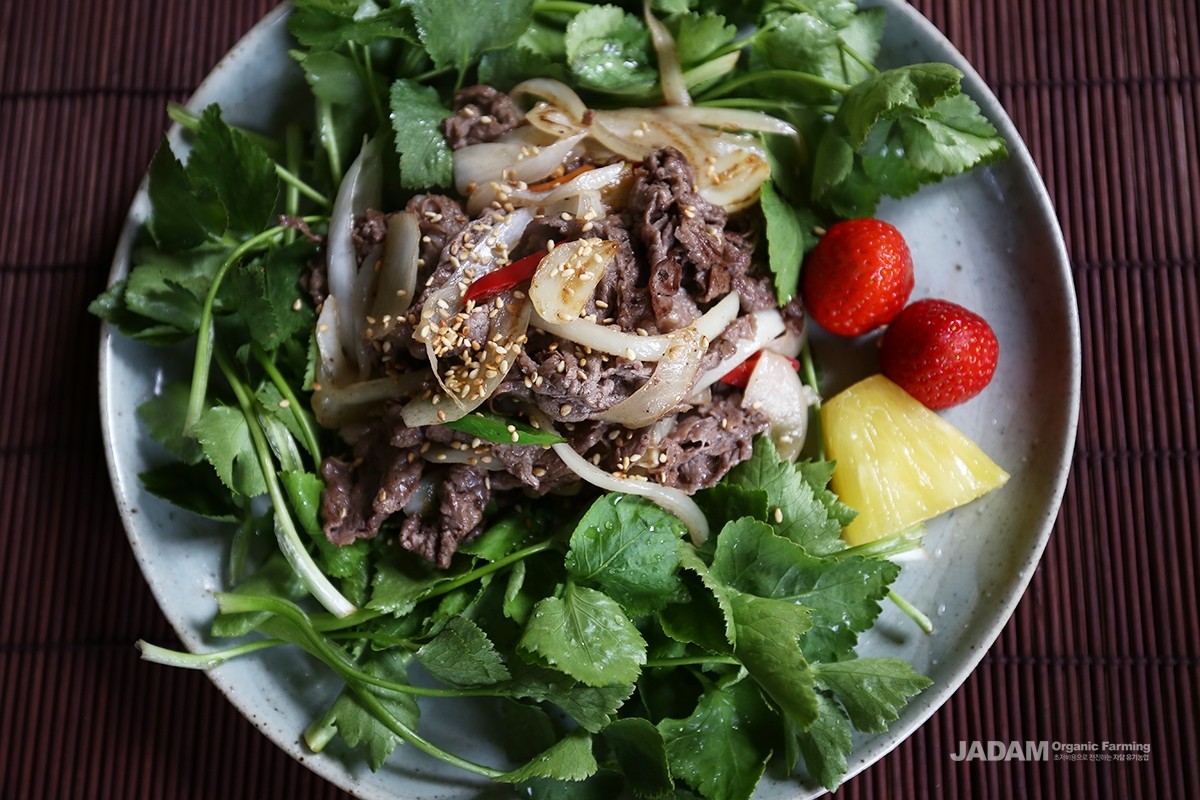
Mitsuba is rich in vitamin A, vitamin C, potassium, and beta-carotene, which has antioxidant properties. The whole plant contains essential oils such as mesityl oxide, methyl isobutyl ketone, α- and β-pinene, camphene, β-myrcene, dipentene, p-cymene, terpinene, terpinolene, and trans-β-ocimene. It is known to relieve stress, promote relaxation, and help prevent high blood pressure.
In traditional medicine, the leaves and stems are referred to as Apaageun (鴨兒根). They are harvested during flowering and dried in the sun. The taste is pungent and slightly bitter, with a neutral property. According to the Chinese Materia Medica (中藥大辭典), it has anti-inflammatory and detoxifying effects, promotes blood circulation, and reduces swelling. It has been used for pneumonia, pulmonary abscess, gonorrhea and genital swelling, toothache caused by wind-heat, boils, shingles, and skin itching.
The roots and fruits are also medicinal. They have a pungent taste and warm nature. The root is used to relieve colds and coughs caused by wind-cold, and to dissolve phlegm. The fruit aids digestion and regulates the flow of qi, and is used to treat indigestion.
Propagation is by seeds or division of clumps. The plant multiplies easily: even a few plants can form a large colony within 2–3 years. It can be harvested continuously, and if the older stems are cut back in summer, new shoots emerge, allowing harvest until autumn.
How to Enjoy Mitsuba
1. Eat fresh as wraps or in salads, or blanch lightly and season as namul.
2. Add to soups, stews, or even a bowl of ramen for fragrance.
3. Pickle it, or stir-fry with meat or fish.
4. When past its prime as a vegetable, mix the leaves and stems with sugar to make a natural enzyme extract.