-
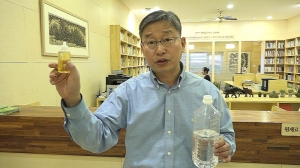
How to make JADAM Herbal Solution (JHS)
Extract herbal solution to use them against pests. Use them with Jadam Wetting Agent to turn them into powerful pesticide. The three herbs commonly used in Jadam are sunchoke, ginkgo, and dried roots of Korean pasque flower. - Watch video (20 min)
Mr. Cho’s lecturesYoungsang Cho2019-08-05 -
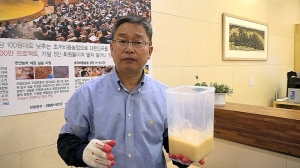
How to make JADAM Wetting Agent (JWA)
This method of making natural wetting agent without heating was invented by Youngsang Cho in 2011. He did not patent the technology in order to share it with the farmers of the world. JWA is permitted for use under organic regulations.
Mr. Cho’s lecturesYoungsang Cho2019-08-05 -
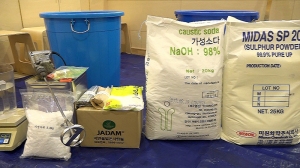
How to make JADAM Sulfur (JS)
The method of making liquid sulfur without heating was invented by Youngsang Cho in 2011. Mr. Cho did not patent the knowledge in order to share it with the farmers of the world. How to make JS is disclosed on Jadam website and books. Jadam sulfur is allowed to
Mr. Cho’s lecturesYoungsang Cho2019-08-05 -
How to make JADAM Microorganism Solution (JMS)
The video explains both heated and un-heated method of culturing microbes. Boiled potatoes is used as the medium. Heating is needed when the water temperature drops below 18℃. - Watch video (42 min)
Mr. Cho’s lecturesYoungsang Cho2019-08-05 -
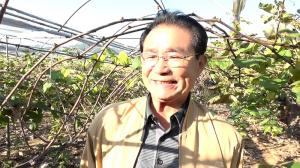
Grapes are tasty and colorful with JADAM sulfur
Mr. Taejoong Yoon was nominated by 2017 organic fruit quality fare in south korea for presidential award. Beacause it had great taste and color. and JADAM sulfur helped with pest control and coloring. even his neighbour farmers agree that it works well. campbell early grapes are sensitive with JADAM
Organic farmingYoungsang Cho2018-03-07 -
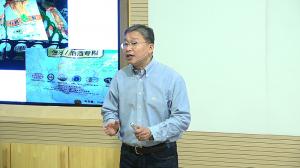
1. Ultra-low-cost Agriculture (2017)
What is the future of agriculture? Agricultural products are traveling more freely between countries. More free trade agreements (FTA) are being concluded. Competition is getting intense. Fuel, energy, chemicals, labor costs are all going up. Jadam has been searching for an answer. The solution we p
Mr. Cho’s lecturesYoungsang Cho2017-12-26 -
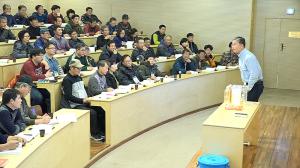
2. Jadam philosophy 1: Do as Nature Does
What is farming? People seek answers in books, experts, and their thoughts, but rarely in the nature. Nature has farmed billions and billions more times than any human. Ask the nature. Do as nature does. Nature's methods are inexpensive and easy. All experts promote rotational cropping. But in n
Mr. Cho’s lecturesYoungsang Cho2017-12-26 -
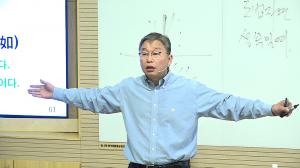
3. Jadam philosophy 2, Good and Bad are One
"Good and bad are one" means that values are relative. There is nothing absolutely good or bad. Even the best medicine will turn into poison if you overuse it. Dispensing the concept of good and bad, Jadam tries to bring the concept of "balance" back into farming. Buying particular "good" micr
Mr. Cho’s lecturesYoungsang Cho2017-12-26 -
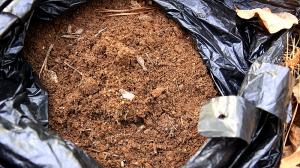
4. Make the soil microbes like that in leaf mold
"What is visible represents what is invisible." This means that the state of roots is what determines the health of the plant. Large and vigorous roots are key to good growth and high quality fruits. However, the use of heavy machineries (tractors), coupled with chemical fertilizers, pesti
Mr. Cho’s lecturesYoungsang Cho2017-12-26 -
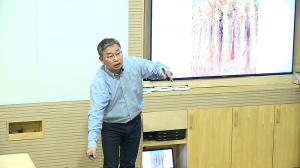
5. Make soil rich in organic matter
What is the most important fertilizer? Do as nature does. Nature grows plants on the spot and turns it into organic matter. Use cover crop method. Leaves, grass, weeds, plants, branches all fall on the soil to enrich it. As roots reach in deeper, the soil changes. You can use grass that grows in win
Mr. Cho’s lecturesYoungsang Cho2017-12-26 -
6. Use sea water for soil minerals
Zero input happens only in nature where all the leaves and fruits fall on the ground. It is not possible in farming. Humans take all the fruits and thus the minerals. How do we replace the lost minerals? Look at it in an earth-perspective. All leached minerals eventually end up in the ocean.
Mr. Cho’s lecturesYoungsang Cho2017-12-26 -
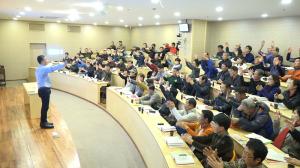
7. Power of Jadam soil management
The whole nation is affected by nematodes and diseases. Toxic chemicals cannot defeat powdery mildew. We thought too much of disinfection, Jadam thinks differently. Jadam takes a diversity approach and tries to maximize the microbial population. Whenever you water, add microbes and sea water (or sal
Mr. Cho’s lecturesYoungsang Cho2017-12-26 -
8. Is putrefaction bad and fermentation good?
Our ancestors made all farm inputs with things nearby. It cost them nearly no money. They were self-sufficient. But organic farming nowadays look for inputs far and wide, give a lot of money to buy them, and develop special machines for them. Organic farming is now for the wealthy people. Why do you
Mr. Cho’s lecturesYoungsang Cho2017-12-26 -
9. Super-easy microbe culturing using potatoes
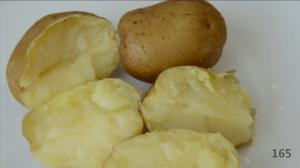
In the leaf mold of mountains live millions of different indigenous microorganisms. Use leaf mold as the starter for cultivating microbes. Feed microbes boiled potatoes and add sea salt for minerals. Apply this microbe solution intensively before transplanting and regularly after. It greatly helps r
Mr. Cho’s lecturesYoungsang Cho2017-12-26 -
10. Look at liquid fertilizer with nutrient-perspective. Use water
Conventional organic farming recommends the use of fermented compost as base fertilizer. But compost is not easy. You need to mix right and turn often. Jadam recommends instead to use the wild grass that grow all around you. Our ancestors have been self-sufficient in fertilizer for thousands
Mr. Cho’s lecturesYoungsang Cho2017-12-26 -
11. High yield is determined by early root settlement
Microbes are "workers" that live underground. The best workers for my field come from fields nearby. Bring leaf mold from uncontaminated soil in the mountains. Leaf mold offers you microbial balance and diversity. Apply irrigation water charged with JMS, JLF, sea salt, rock dust water every time y
Mr. Cho’s lecturesYoungsang Cho2017-12-26 -
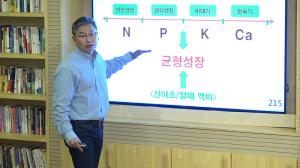
12. How to apply fertilizer? Simple and easy.. No more nutrition cycle theory
Even if you were to read all the books taught in the agriculture university, you will still be confused as to how to apply fertilizer for your crops. Why is knowledge so difficult? Because experts and corporations want to exclusively possess and market technology. Farmers blindly believe that compli
Mr. Cho’s lecturesYoungsang Cho2017-12-26 -
13. Do not rely on soil tests. Just apply balanced nutrients
What is it that the farmers want to know? Three things: base fertilizer, additional fertilizer, and pesticide. Jadam has a simple and easy solution for this. What is fertilizer? It is bringing back to the soil what has gone out through the leaves and fruits. Fill the nutrient gap with something simi
Mr. Cho’s lecturesYoungsang Cho2017-12-26 -
14. There is no pesticide-free farming
All farmers yearn for a pesticide-free farming. Many believe that once the plant is strong enough, it produces chemicals to protect itself from disease and insects, thus eliminating the need for pesticide. Unfortunately, that is not so. Do trees love their fruit? Do they want to hold on and protect
Mr. Cho’s lecturesYoungsang Cho2017-12-26 -
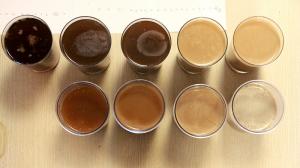
15. Easy understanding of difficult pesticides
You should know how to do pesticide research. All you need is your kitchen. Jadam strived to create a system of farming that is simple, easy, and can be done at home. We use "cups" for testing pesticides. Cups are all you need to become a natural pesticide expert. It is very practic
Mr. Cho’s lecturesYoungsang Cho2017-12-26
